Category: Web Development

  • ADA Website Compliance Checklist: What Your Business Needs to Know in 2026

    ADA Website Compliance Checklist: What Your Business Needs to Know in 2026

    ADA website compliance means building and maintaining your website so people with disabilities can use it, typically by meeting WCAG 2.1 Level AA, the technical standard courts and regulators now treat as the benchmark. It applies to almost any business with a public-facing website, not just large corporations, and the cost of ignoring it is rising fast: federal website accessibility lawsuits jumped 27% in 2025 alone. Below is a full checklist, the legal background, and exactly what to fix first.

    If you’ve landed here because a customer complained, a lawyer sent a demand letter, or you just want to get ahead of the problem before it happens, you’re not being paranoid. Digital accessibility went from a “nice to have” to one of the fastest-growing sources of legal exposure for small and mid-sized businesses in the U.S., and it’s just as relevant if your business runs primarily through an e-commerce store as it is for a standard brochure site. This guide covers what ADA website compliance actually requires, why it’s suddenly everywhere, and a practical checklist you can start working through today.

    The Americans with Disabilities Act (ADA) was passed in 1990, long before most businesses had websites. It doesn’t mention “websites” anywhere in its original text. But courts have consistently ruled that a business’s website counts as a “place of public accommodation” under Title III of the ADA, the section that applies to private businesses, which means it has to be accessible to people with disabilities the same way a physical storefront does.

    In practice, “ADA website compliance” means:

    • People using screen readers can navigate and understand your content
    • People who can’t use a mouse can operate your site with a keyboard alone
    • People with low vision or color blindness can read your text and distinguish your buttons/links
    • People who are deaf or hard of hearing have captions or transcripts for video/audio content
    • Forms, menus, and interactive elements work with assistive technology

    There’s no single “ADA compliance certificate” you can buy. Instead, compliance is measured against a separate technical standard: WCAG.

    What Is WCAG, and Which Level Do I Need to Meet?

    WCAG (Web Content Accessibility Guidelines) is published by the W3C, the organization that sets core web standards. It’s organized into three conformance levels:

    Level A

    Bare minimum

    Basic accessibility exists at all (e.g., alt text is present).

    Rarely sufficient alone
    Level AA

    The practical standard

    Color contrast, keyboard navigation, form labels, captions.

    ✓ Most businesses – this is the target
    Level AAA

    Strictest level

    Includes things like sign-language interpretation for all video.

    Usually specialized public services only

    WCAG 2.1 Level AA is the standard that matters for you. It’s the exact technical standard the Department of Justice formally adopted for state and local government websites in its 2024 Title II rule, and it’s the standard federal courts overwhelmingly point to when private businesses are sued under Title III even though there’s technically no federal regulation spelling that out for private companies yet. The Department of Justice’s own guidance is direct that Title III covers “almost all types of businesses that serve the public,” regardless of size.

    Person adjusting website accessibility settings on a laptop in a modern office

    Does ADA Website Compliance Apply to My Small Business?

    Short answer: almost certainly yes, if you serve the public online. There’s an important legal distinction worth understanding:

    Title II applies to state and local government websites. It now has a formal, legally binding rule requiring WCAG 2.1 AA, with compliance deadlines of April 26, 2027 for larger public entities and April 26, 2028 for smaller ones.
    Title III applies to private businesses; this is the one that affects you. There’s no single federal regulation spelling out the exact technical requirement, which is part of why the space feels murky. But the ADA statute itself already prohibits discrimination by “public accommodations,” and courts have applied that to commercial websites for years, using WCAG 2.1 AA as the practical benchmark.

    The “readily achievable” standard does scale expectations based on your size and resources; a five-person local business isn’t held to the exact same bar as a national retailer. But “we’re small” is not a legal exemption, and the lawsuit data below shows plaintiffs are targeting small and mid-sized businesses just as often as large ones.

    Why Are ADA Website Lawsuits Rising So Fast?

    This is the part most small business owners haven’t caught up on yet. Federal website accessibility lawsuits under ADA Title III hit 3,117 filings in 2025, a 27% jump from 2024, and the highest total in three years.

    2017
    814
    2018
    2,258
    2019
    2,256
    2020
    2,523
    2021
    2,895
    2022
    3,255
    2023
    2,794
    2024
    2,452
    2025
    3,117

    Source: Seyfarth Shaw, 2026 annual tracking, federal website accessibility lawsuit filings, 2017-2025.

    A few numbers explain why this keeps accelerating:

    36%
    of all federal ADA Title III lawsuits are now website cases – up from 28% a year earlier
    ~70%
    of website accessibility suits target ecommerce sites; over a third of the top 500 online retailers have already been sued
    40%
    of 2025 filings came from self-represented (“pro se”) plaintiffs, up sharply as AI tools make scanning sites trivial
    NY · FL · CA
    account for the largest share of filings, with Illinois and Pennsylvania close behind

    As one industry accessibility firm put it plainly: settling a lawsuit without fixing the underlying issues doesn’t end the exposure; plaintiff firms actively track which businesses paid to settle without remediating, and return.

    What Happens If My Website Isn’t ADA Compliant?

    Most cases resolve through settlement rather than trial. Based on compiled legal data, typical ADA website lawsuit settlements fall in the $5,000–$75,000 range, though costs climb significantly once attorney’s fees, an audit, and remediation work are added on top. In some states, like California, plaintiffs can also seek statutory monetary damages, not just an order to fix the site.

    Repeat exposure: nearly half of all 2025 federal cases involved companies being sued a second time, usually because the first fix was cosmetic (an overlay widget, a quick patch) rather than a real remediation.

    What Are the Most Common ADA Website Compliance Failures?

    If you want to know where to actually start, this is the most useful data available. An analysis of top-visited websites found that a small handful of issues account for the overwhelming majority of accessibility violations:

    Issue % of Sites Affected
    Low color contrast text 79.1%
    Missing image alt text 55.5%
    Missing form input labels 48.2%
    Empty or unlabeled links 45.4%
    Empty or unlabeled buttons 29.6%
    Missing document language tag 15.8%

    Source: WCAGsafe, 2025-2026 lawsuit and audit data.

    These six issues alone account for the large majority of all WCAG failures found in real audits genuinely useful news, because it means most businesses can meaningfully reduce their risk by fixing a short, well-defined list of problems rather than an overwhelming, open-ended one.

    What’s an ADA Website Compliance Checklist I Can Actually Use?

    Team reviewing a website accessibility audit with a laptop and checklist

    Here’s a practical starting checklist, ordered roughly by how common (and how fixable) each issue tends to be:

    Color contrast: Body text should meet at least a 4.5:1 contrast ratio against its background; large text needs at least 3:1.
    Image alt text: Every meaningful image has a written description; purely decorative images are marked so screen readers skip them.
    Form labels: Every input field (name, email, phone, etc.) has a proper <label> tied to it, not just placeholder text.
    Link and button text: Links say where they go (“Read our pricing guide,” not “click here”); buttons are never left blank or icon-only without a label.
    Keyboard navigation: You can Tab through your entire site menus, forms, popups without ever touching a mouse.
    Video captions: All video content has accurate captions; audio-only content has a transcript.
    Heading structure: Headings (H1, H2, H3) follow a logical order and aren’t skipped or used purely for visual styling.
    Document language tag: Your HTML declares the page language (e.g., lang=”en”) so screen readers use the right pronunciation rules.
    Focus indicators: When you Tab to a link or button, there’s a visible outline showing where you are.
    Responsive zoom: Your site remains usable when zoomed to 200%, without text overlapping or cutting off.
    No flashing content: Nothing flashes more than three times per second (a seizure risk under WCAG).
    Dismissible popups: Every popup can be closed with the keyboard (usually Escape), not just a mouse click.

    This list covers the issues responsible for the vast majority of real-world violations, but a full WCAG 2.1 AA audit goes deeper into things like ARIA attributes, dynamic content announcements, and time-based media. If your site handles ecommerce checkout flows or account logins, those areas deserve particular attention, since they combine high lawsuit exposure with real revenue impact if customers with disabilities can’t complete a purchase. Our ecommerce solutions team builds checkout and account flows with this in mind from the start.

    Do Accessibility Overlay Widgets Make My Site ADA Compliant?

    No and this is one of the more expensive mistakes businesses make. Overlay widgets (the small accessibility icon that adds a menu of toggles like “increase text size” or “high contrast mode”) are marketed as instant compliance. Still, they don’t fix the underlying code your screen reader actually interacts with. Regulators have taken notice, too: the FTC ordered an online marketer to pay $1 million over deceptive claims that its AI-based accessibility product could make websites ADA-compliant.

    Overlays aren’t inherently useless as a supplement, but relying on one instead of fixing actual site code is exactly the kind of surface-level fix that leads to repeat lawsuits.

    How Do I Test My Website for ADA Compliance?

    A reasonable testing process combines three layers:

    1 Automated scanning: Free and paid tools (like WAVE or axe DevTools) catch a meaningful chunk of issues instantly, particularly contrast, missing alt text, and missing labels. Automated tools generally catch a minority of total WCAG issues on their own, so treat this as a first pass, not the finish line.
    2 Manual keyboard and screen reader testing: Actually tabbing through your site and testing with a screen reader (like NVDA or VoiceOver) catches the structural and interaction issues automated tools miss.
    3 A professional accessibility audit: For anything customer-facing and revenue-critical (checkout flows, account creation, contact forms), a manual audit from someone who understands both WCAG and how real assistive technology users navigate is worth the investment before, not after, a demand letter arrives.

    Our Web Design & Development service includes a WCAG accessibility assessment as part of our free website audit a practical starting point if you want a clear picture of where your site actually stands.

    How Much Does ADA Website Compliance Cost?

    It depends heavily on your site’s size, platform, and how many issues you’re starting with. A small brochure site with a handful of contrast and alt-text fixes is a very different project from a full ecommerce store with a complex checkout flow. As a general rule, addressing accessibility issues early, as part of routine website maintenance, costs a fraction of a reactive remediation project done under legal pressure after a demand letter arrives.

    If cost is a genuine concern, it’s worth knowing that in the U.S., some small businesses may qualify for the federal Disabled Access Credit (IRS Form 8826), which can offset a portion of accessibility-related expenses worth a conversation with your accountant.

    Frequently Asked Questions

    Is ADA website compliance legally required for small businesses?

    There’s no formal federal regulation spelling out exact technical requirements for private businesses the way there now is for government sites. But the ADA statute itself already prohibits discrimination by “public accommodations,” and courts have consistently applied that to commercial websites, using WCAG 2.1 AA as the practical benchmark regardless of business size.

    What’s the difference between ADA and WCAG?

    The ADA is the U.S. law. WCAG is the technical standard used to measure whether a website meets that law’s accessibility requirement. There’s no such thing as being “WCAG compliant but not ADA compliant” in practice, WCAG 2.1 AA is simply how compliance gets measured.

    Can I get sued even if no one has complained yet?

    Yes. A large share of recent lawsuits come from plaintiffs including a growing number of self-represented, pro se filers who scan sites proactively, sometimes using AI tools, without ever having tried to use the site as a genuine customer first.

    Does having a mobile app instead of a mobile website change anything?

    No. Mobile apps fall under the same accessibility expectations as websites; the 2024 DOJ rule for government entities, for instance, explicitly covers mobile apps alongside web content, and the same WCAG-based standard applies in Title III litigation.

    Will an accessibility overlay widget protect me from a lawsuit?

    Not reliably. Overlays can help in limited ways but don’t fix underlying code issues, and regulators have already taken enforcement action against providers making exaggerated compliance claims. A real fix touches your site’s actual HTML, not just a bolted-on widget.

    How do I know if I’m currently at risk?

    Run your site through an automated scanner as a first pass, then check it against the checklist above. If your site has ecommerce functionality, hasn’t been reviewed for accessibility, and gets meaningful organic or paid traffic, treat it as a real priority rather than a someday task.

    Final Thoughts
    ADA website compliance isn’t a box you check once and forget. It’s an ongoing part of how your site is built and maintained, much like the security and performance maintenance your site needs to stay fast and safe. The good news is that a small number of fixable issues contrast, alt text, form labels, and link text account for the overwhelming majority of real-world violations, which means most businesses can meaningfully reduce their risk without an overwhelming rebuild.

    Want a clear picture of where your website stands?

    TechXaro’s Web Design & Development team includes a WCAG accessibility assessment in every free website audit, so you know exactly what to fix and in what order.
    Get Your Free Website Audit

  • The Ultimate Website Redesign Guide: How to Revamp Your Site Without Losing Customers

    The Ultimate Website Redesign Guide: How to Revamp Your Site Without Losing Customers

    Imagine walking into your favorite local grocery store. You know exactly where the milk is, the staff is friendly, and checkout is a breeze.

    Now imagine walking in the next day to find the store completely changed. The aisles are rearranged, the lights are dim, the sign on the door is gone, and the milk is hidden behind a wall of brooms. You would probably get frustrated, leave empty-handed, and head straight to the competitor down the street.

    This is exactly what happens when a business executes a sloppy website overhaul.

    Your website is your digital storefront. When done right, a fresh look can skyrocket your sales and make your brand look incredible. When done wrong, it can confuse your loyal customers, tank your search rankings, and permanently damage your bottom line.
    Mismanaging your site overhaul can tank your organic traffic by up to 50% and alienate loyal customers overnight. Below is the precise strategy for executing a flawless, revenue-driven revamp.

    Whether you are a small business owner, a marketing student, or a professional designer, this guide will show you how to pull off a flawless website makeover.


    What is a Website Redesign?

    A website redesign is the process of significantly changing your site’s visual appearance, code, navigation structure, and user experience.

    However, do not confuse a total redesign with a simple aesthetic refresh. A true redesign re-engineers how your site functions to drive business growth actively.

    How do you know it is time for a full overhaul? Here are a few telltale signs that your current system is failing you:

    1. Mobile Friction is Costing You Conversions

    More than half of all internet traffic comes from mobile devices. If users have to pinch their screens, zoom in, or struggle to tap tiny buttons just to read your text, you are bleeding revenue every single day.

    2. Your Bounce Rate is Sky-High

    If people open your website and immediately click the “back” button, something is broken. A high bounce rate usually means your site is confusing, visually outdated, or takes too long to load.

    3. Your Business Goals Have Outgrown Your Platform

    Maybe your site was built years ago as a simple blog, but now you want to sell products online. If your current platform cannot support your transaction volume, it is time to transition to high-performance web design & development services to scale properly.
    Is your site currently turning prospective users away? Before changing a single line of code, get a benchmark report.
    Claim Your Free UX & SEO Audit to Uncover Hidden Drop-Off Points

    The Secret Ingredient: Focus on the User Experience (UX)

    The single biggest mistake businesses make during a redesign is focusing exclusively on cosmetics. They demand flashy animations, massive video backgrounds, and complex, artsy layouts.

    But a website is a revenue tool, not a painting. If your visitors cannot locate your contact page or checkout button within 3 seconds, they will leave.

    The 3-Second Rule

    When a user lands on your homepage, they must immediately digest three core pieces of information:

    • What do you do or sell?

    • How does it make their life better?

    • What exact action do they need to take next (e.g., buying a product or booking a call)?

    If your new design buries this information under a mountain of heavy, fancy graphics, your conversion rates will tank.

    The 5-Step Roadmap to Redesign Your Site Without Losing Traffic

    Ready to build a better site? Follow this step-by-step framework to keep your project on track, under budget, and structurally primed to convert.

    Step 1: Benchmark Your Current Metrics

    Before you break anything, you need to know what is currently working. Open your analytics dashboard and document your current monthly visitors, baseline conversion rates, and your highest-performing pages. This gives you a clear data baseline to measure your success post-launch.

    Step 2: Protect Your SEO (Search Engine Optimization)

    This is where most businesses ruin their hard work. If you change the web addresses (URLs) of your pages without telling Google, you will lose your search rankings overnight.

    • Create a URL Map: Document every single old URL on your live site.

    • Set Up 301 Redirects: This explicitly tells search engines that your old page has permanently moved to a new home, preserving your authority. If you are handling complex migrations, integrating professional SEO & digital marketing oversight is mandatory to prevent traffic drops.

    Step 3: Gather Content Before Designing

    Do not design a beautiful layout and then try to awkwardly cram your copy into it. Write your words first. Figure out what messages, value propositions, and headlines you need. Then, design a tailored layout that naturally highlights those words.

    Step 4: Keep Your Branding Consistent

    Your website should feel like an extension of your physical brand. Use the same logo, primary color palettes, and brand voice that you use across your social media and physical packaging. Consistency builds immediate consumer trust, which is why investing in cohesive branding & creative design pays massive long-term dividends.

    Step 5: Test Everything Before Going Live

    Do not just launch the site and hope for the best. Review your staging site on iPhones, Androids, Macs, and PCs. Test every single form field, click every button, and process a test transaction to ensure your custom eCommerce solutions function flawlessly.

    Real-World Examples of Redesign Success and Failure

    Let us look at how design choices directly impact a business’s revenue.

    The Redesign Disaster: Target (2011)

    Years ago, retail giant Target rolled out a massive redesign of its online store. They focused heavily on beautiful, artsy imagery. However, they broke the checkout process, causing the site to crash repeatedly on big shopping days. Customers were furious, and the company lost millions in potential holiday sales because it prioritized looks over function.

    The Redesign Win: A Local Landscaping Company

    Let us look at a smaller, more practical example. A local lawn care business had an old website built in 2015. It featured text-heavy pages and a complicated contact form.

    During their redesign, they simplified the menu, added a bright green button that said “Get a Free Quote in 60 Seconds,” and uploaded real photos of their actual team. Even though their web traffic stayed the same, their incoming phone calls and leads tripled simply because the site removed friction.

    Don’t Guess Your Redesign Strategy

    Let our senior technical architects map out your migration plan so you don’t lose a single keyword ranking.

    Get My Free Migration & UX Blueprint

    Quick Actionable Tips for Your Website Makeover

    • Speed It Up: Compress your large images before uploading them. Slow websites drive customers straight to your competitors.

    • Use Strategic Whitespace: Do not crowd your pages. Leaving blank space around text and images makes your content clean and easy to scan.

    • Make Text Highly Readable: Use high-contrast colors (like black text on a clean white background) and a font size of at least

    Frequently Asked Questions (FAQs)

    1. How much does a website redesign cost?

    The price varies wildly based on complexity. A freelancer or small agency might charge anywhere from $2,000 to $10,000 for a standard business site. Custom enterprise platforms requiring specialized integrations will scale higher based on your functional needs.

    2. How often should a business redesign its website?

    On average, companies update their websites every 2 to 3 years. Technology changes quickly, design trends evolve, and your business goals will grow. For businesses without an in-house team, enrolling in a dedicated website maintenance & support program ensures long-term performance.

    3. Will a redesign hurt my Google rankings?

    It can cause a temporary dip for a few weeks as Google crawls the new page structures. However, if you use proper 301 redirects, optimize your Core Web Vitals, and provide better content, your rankings will ultimately go up.

    Conclusion: Build with Purpose

    A great website redesign is not about chasing the latest tech trends or picking the prettiest colors. It is about removing the friction between your customer and your product. By keeping your layout simple, prioritizing mobile users, and protecting your SEO, you can turn your website into a powerful sales machine.
    Tell Us About Your Next Step

  • Why Every Growing Business Needs a Custom Mobile App Development Service

    Why Every Growing Business Needs a Custom Mobile App Development Service

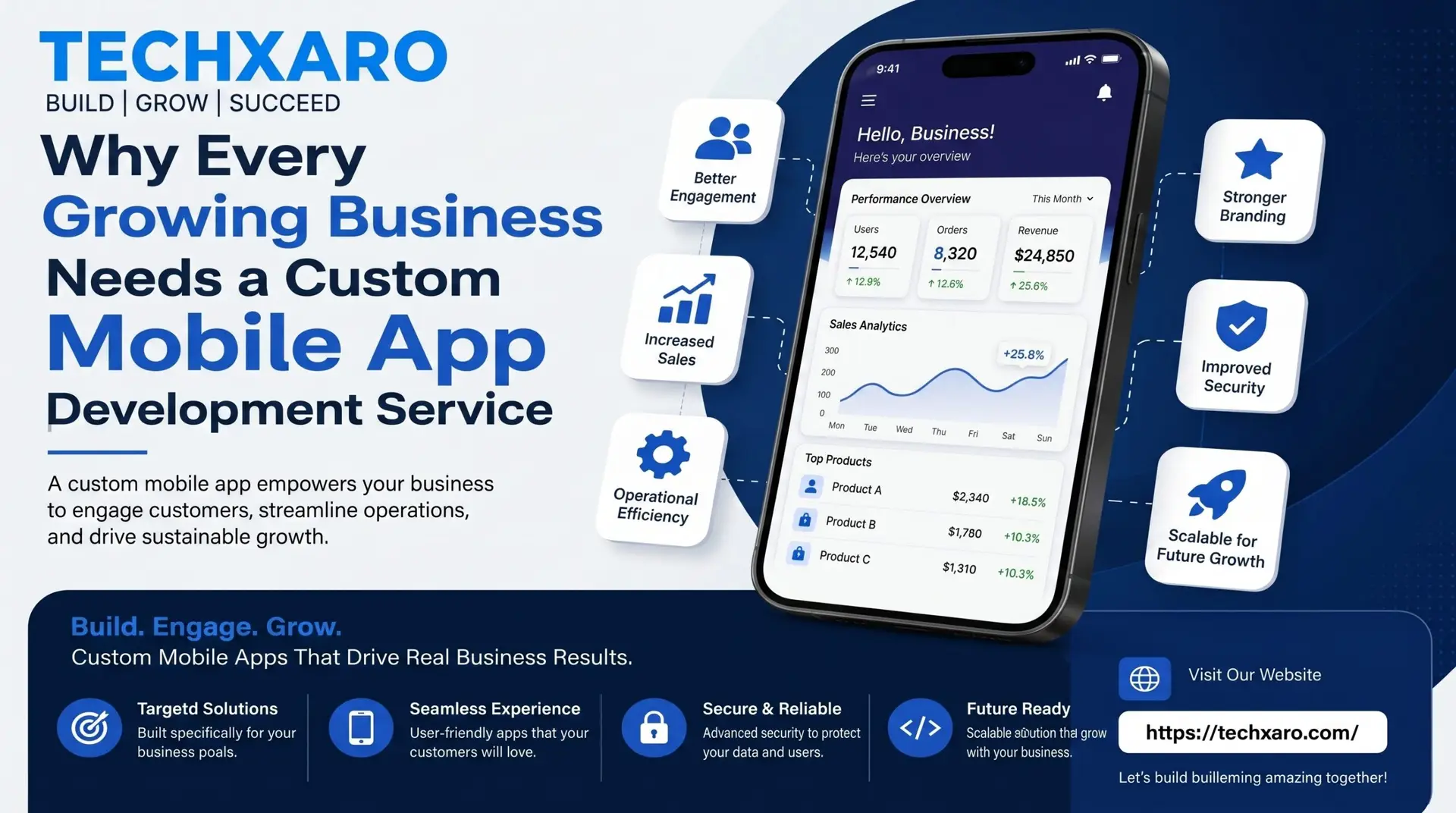
    In today’s digital marketplace, businesses are constantly searching for new ways to engage customers, improve operational efficiency, and stay ahead of competitors. One of the most effective ways to achieve these goals is through a custom mobile application. The purpose of this blog is to explain why investing in a Custom Mobile App Development Service has become essential for growing businesses. From improving customer experience to increasing brand visibility and revenue, a custom mobile app can provide long-term benefits that support sustainable business growth.

    Have a groundbreaking app idea or need to mobilize your business workflows? Don’t leave your technical architecture to chance. Get a clear execution roadmap from day one.
    Claim Your Free App Architecture & Discovery Consultation Call

    What Is Custom Mobile App Development?

    Custom mobile app development is the process of designing and building a mobile application specifically tailored to a business’s unique needs, goals, and target audience. Unlike off-the-shelf solutions, custom apps are created with personalized features, branding, and functionality.

    Businesses can develop custom applications for:

    • Customer engagement
    • Online shopping
    • Appointment scheduling
    • Internal operations
    • Employee management
    • Customer support

    A customized solution ensures the app aligns perfectly with business objectives and user expectations. Businesses planning digital expansion can also explore digital transformation strategies to future-proof long-term growth.

    Why Mobile Apps Matter More Than Ever

    Smartphones have become a central part of everyday life. Consumers use mobile devices for shopping, communication, entertainment, banking, and business interactions.

    Key Mobile Usage Statistics

    • Over 6 billion smartphone users worldwide.
    • Mobile devices generate the majority of internet traffic globally.
    • Consumers spend several hours daily using mobile applications.
    • Mobile commerce continues to grow year after year.

    These trends demonstrate why businesses must establish a strong mobile presence to remain competitive. Pairing mobile technology with SEO & Digital Marketing Services helps businesses maximize visibility and user acquisition.

    Benefits of Custom Mobile App Development for Growing Businesses

    Enhanced Customer Engagement

    A mobile app creates a direct communication channel between businesses and customers. Features such as push notifications, in-app messaging, and personalized offers help keep users engaged.

    Benefits include:

    • Instant customer communication
    • Personalized experiences
    • Improved customer satisfaction
    • Higher interaction rates

    The easier it is for customers to engage with your brand, the stronger your customer relationships become. Businesses focusing on user experience should also read about why user-centered design matters in mobile app development.

    Improved Brand Visibility

    A custom mobile app places your brand directly on customers’ devices. Every time users unlock their phones, they see your app icon, increasing brand recognition.

    Advantages include:

    • Increased brand awareness
    • Stronger customer recall
    • Better customer loyalty
    • Continuous brand exposure

    This constant visibility helps businesses remain top-of-mind among their target audience. Strong branding combined with
    Creative design services can further improve customer recognition and trust.

    Increased Customer Retention

    Retaining existing customers is often more cost-effective than acquiring new ones. Mobile apps encourage repeat interactions through loyalty programs, rewards systems, and personalized experiences.

    Popular retention features include:

    • Reward points
    • Membership programs
    • Exclusive offers
    • Personalized recommendations

    These features motivate customers to continue engaging with your business over time.

    Higher Sales and Revenue

    A mobile app simplifies the buying process by providing customers with convenient access to products and services. Faster navigation and secure payment options can significantly improve conversion rates.

    Revenue-driving features include:

    • One-click purchases
    • Mobile payment integration
    • Personalized product suggestions
    • Promotional campaigns

    A seamless mobile experience often leads to increased sales opportunities. Businesses with online stores can benefit from
    eCommerce solutionsnthat integrate directly with mobile applications.

    Want to Turn Your App Into a Revenue Machine?
    Get Your Free Mobile Growth Strategy Session

    Custom Apps vs Generic App Solutions

    Many businesses initially consider ready-made applications because they appear more affordable. However, custom mobile apps offer significantly greater flexibility and long-term value.

    Feature Custom Mobile App Generic App Solution
    Unique Branding Yes Limited
    Custom Features Fully Customized Restricted
    Scalability High Limited
    Security Enhanced Standard
    Third-Party Integration Flexible Limited
    Long-Term Growth Support Excellent Moderate

    Custom applications allow businesses to adapt quickly as customer needs and market demands evolve. Learn more about
    steps to build a successful mobile application before starting development.

    Better Customer Experience Through Personalization

    Modern consumers expect personalized experiences. Custom mobile apps allow businesses to deliver tailored content based on user behavior and preferences.

    Personalization Features

    User Profiles

    User profiles allow mobile apps to store customer preferences, browsing history, and past purchases. This information helps businesses provide a more personalized experience for each user. As a result, customers can access relevant content and services more quickly.

    Customized Recommendations

    Custom mobile apps can analyze user behavior to suggest products or services that match individual interests. Personalized recommendations improve the customer experience by making it easier to discover relevant options. This often leads to higher engagement and increased sales.

    Location-Based Services

    Location-based features enable businesses to deliver promotions, offers, and information based on a user’s geographic location. This makes marketing efforts more relevant and timely. Customers benefit from receiving content that is useful to their specific area.

    Personalized Notifications

    Personalized notifications allow businesses to send targeted messages based on customer preferences and activities. These notifications can include special offers, reminders, or important updates. Relevant messaging helps increase user engagement and encourages repeat interactions with the app.

    Operational Efficiency and Business Automation

    Mobile applications do more than serve customers. They also help businesses streamline internal operations. Companies investing in website maintenance and support services can maintain better performance and operational stability.

    Examples of Business Automation

    Appointment Scheduling

    Mobile apps can automate appointment bookings by allowing customers to select available time slots without manual assistance. This reduces scheduling conflicts and saves time for both customers and staff. Automated reminders can also help minimize missed appointments.

    Employee Communication

    Custom mobile apps improve communication by providing a centralized platform for updates, announcements, and team collaboration. Employees can receive real-time information and stay connected regardless of their location. This helps improve coordination and workplace efficiency.

    Inventory Management

    Mobile apps can track inventory levels in real time, helping businesses monitor stock availability and reduce errors. Automated inventory updates make it easier to manage products and prevent overstocking or shortages. This improves operational efficiency and decision-making.

    Customer Support Systems

    Apps can automate customer support through chatbots, ticketing systems, and self-service features. Customers can quickly find answers to common questions without waiting for assistance. This improves response times and enhances the overall customer experience.

    Order Tracking

    Order tracking features allow customers to monitor the status of their purchases in real time. Businesses can automatically provide shipping updates and delivery notifications through the app. This increases transparency, improves customer satisfaction, and reduces support inquiries.

    Automation Reduces Manual Tasks, Improves Productivity, and Minimizes Human Error

    Business automation eliminates many repetitive tasks that would otherwise require manual effort. By reducing human involvement in routine processes, businesses can improve accuracy, save time, and increase overall productivity. This allows employees to focus on more important tasks that contribute to business growth.

    Competitive Advantage in the Digital Marketplace

    Many businesses still rely solely on websites. A custom mobile app can help your company stand out from competitors by offering additional convenience and functionality.

    Competitive Benefits

    • Faster customer interactions
    • Better accessibility
    • Stronger brand positioning
    • Enhanced customer loyalty
    • Improved service delivery

    A well-designed app demonstrates innovation and commitment to customer experience. Businesses should also focus on building a high-performing business website to strengthen overall digital presence.

    Security and Data Protection

    Security is a major concern for both businesses and customers. Custom mobile app development allows organizations to implement advanced security measures tailored to their specific requirements.

    Security Features

    • Data encryption
    • Secure authentication
    • Multi-factor authentication
    • Secure payment processing
    • User access controls

    Strong security builds customer trust and protects sensitive information.

    Integration with Existing Business Systems

    Custom apps can seamlessly integrate with existing business tools and software.

    Common Integrations

    • CRM systems
    • ERP software
    • Payment gateways
    • Marketing automation tools
    • Customer support platforms

    Integration improves workflow efficiency and provides a unified business ecosystem. Businesses expanding online sales can also review eCommerce solutions for online business growth.

    Scalability for Future Growth

    As businesses grow, their technology requirements evolve. A custom mobile app can be expanded with additional features and functionality without requiring a complete rebuild.

    Scalable Features

    • New service offerings
    • Expanded user capacity
    • Additional payment methods
    • Advanced analytics
    • Multi-language support

    Scalability ensures your investment continues to deliver value as your business expands.

    Choosing the Right Custom Mobile App Development Service

    Selecting the right development partner is crucial for project success. Factors to Consider

    Industry Experience

    Choose a mobile app development company that has experience working with businesses in your industry. An experienced team understands industry-specific challenges and can provide solutions that align with your business goals. Their expertise often leads to better app performance and user satisfaction.

    Technical Skills

    A reliable development partner should have strong technical expertise in Android, iOS, and cross-platform app development. They should also be familiar with the latest technologies, frameworks, and security practices. This ensures your app is built efficiently and remains competitive in the market.

    Portfolio Review

    Reviewing a company’s portfolio helps you evaluate the quality of its previous work and development capabilities. Look for apps that are similar to your project in terms of functionality and design. Client testimonials and case studies can also provide insight into their reliability and success rate.

    Ongoing Support

    Mobile apps require regular updates, bug fixes, and performance improvements after launch. A development company that offers ongoing maintenance and support services can help keep your app secure, functional, and compatible with new devices and operating systems. Continuous maintenance ensures long-term success and user satisfaction.

    Ready to Build a Scalable Mobile App for Your Business? Book Your Free Mobile App Strategy Consultation

    Conclusion

    A custom mobile application is no longer a luxury reserved for large corporations, and at TechXaro, we believe every growing business deserves a powerful digital presence. A professionally built mobile app has become a strategic business tool that helps companies improve customer engagement, increase brand visibility, and drive sales. With TechXaro’s Custom Mobile App Development Services, businesses can move beyond generic solutions and embrace technology that truly reflects their vision. Our expert team ensures every feature, every design element, and every line of code is crafted with your business success in mind.

    FAQs

    Why does a growing business need a custom mobile app?

    A custom mobile app helps businesses improve customer engagement, increase brand visibility, and provide personalized experiences. It also supports long-term growth by offering features tailored to specific business needs.

    How much does custom mobile app development cost?

    The cost depends on factors such as app complexity, features, platform requirements, and development time. Simple apps are generally more affordable than enterprise-level solutions.

    Can a custom mobile app increase sales?

    Yes, mobile apps simplify the purchasing process, improve customer convenience, and support personalized marketing efforts. These factors often contribute to higher conversion rates and increased revenue.

    What platforms can a custom mobile app support?

    Custom mobile apps can be developed for Android, iOS, or both platforms using cross-platform development frameworks. The choice depends on business goals and target audiences.

    How long does it take to develop a custom mobile app?

    Development timelines vary depending on the project’s complexity and features. A basic app may take a few months, while advanced applications require longer development cycles.

    Is a mobile app better than a website?

    A website and mobile app serve different purposes. While websites are essential for online visibility, mobile apps provide a more personalized and convenient user experience for existing customers.

    From Idea to App Store. Partner with TechXaro.

    Stop letting technical execution bottlenecks delay your growth. Let’s sit down, review your business objectives, map out your functional requirements, and build a scalable app engineered to convert.
    Schedule Your Technical App Discovery Session with TechXaro


    Get Free Quote

  • Web Design & Development: The Complete Guide to Building a High-Performing Business Website

    Web Design & Development: The Complete Guide to Building a High-Performing Business Website


    Why Your Website Matters for Business

    In today’s digital world, your website is your brand’s first impression. A professional website does more than just look good. It builds trust, brings in new leads, and grows your sales.

    This guide covers everything you need to know about Web Design & Development. Whether you are building a new site or upgrading an old one, these tips will help you make the right choices for your business.

    Is your current website costing you customers? Stop losing traffic to slow load times and confusing layouts. Partner with a team that builds digital experiences engineered to convert. Claim Your Free Website Performance & UX Audit Today

    What Is Web Design & Development?

    Web Design & Development refers to the process of creating, building, and maintaining websites. While these two disciplines work together, they focus on different aspects of a website.

    Web Design

    Web design focuses on:

    • User Interface (UI)
    • User Experience (UX)
    • Visual branding
    • Layout and navigation
    • Typography and color schemes

    The goal is to create a website that is visually appealing and easy to use.

    Web Development

    Web development focuses on:

    • Front-end coding
    • Back-end functionality
    • Database management
    • Website performance
    • Security and integrations

    Developers transform design concepts into fully functional websites.

    Why Every Business Needs Professional Web Design & Development

    A website is no longer just an online brochure that displays information about your company. It has become one of the most important tools for attracting customers, building brand awareness, generating leads, and driving sales. A professionally designed and developed website helps businesses establish a strong online presence and stay competitive in today’s digital marketplace.

    Builds Trust and Credibility

    Your website often creates the first impression potential customers have of your business. When visitors land on a professionally designed website, they are more likely to view your company as trustworthy and reliable.

    A modern website with a clean design, clear navigation, professional branding, and up-to-date content demonstrates that your business is credible and customer-focused. On the other hand, an outdated or poorly designed website can make visitors question the quality of your products or services.

    Professional web design helps establish:

    • Brand authority
    • Customer confidence
    • Professional reputation
    • Greater trust among potential clients

    Since many consumers research businesses online before making purchasing decisions, a credible website can significantly influence their choice.

    Improves User Experience

    User experience (UX) refers to how easily and efficiently visitors can interact with your website. A professional web design and development team ensures that your website is easy to navigate, visually appealing, and functional across all devices.

    A positive user experience includes:

    • Fast page loading times
    • Mobile responsiveness
    • Easy navigation
    • Clear content structure
    • Accessible design

    When users can quickly find the information they need, they are more likely to stay on your website longer and engage with your business. A smooth browsing experience also reduces frustration and encourages visitors to return in the future.

    Increases Search Engine Visibility

    Even the most attractive website will not generate results if potential customers cannot find it online. Professional web design and development incorporate SEO (Search Engine Optimization) best practices that help improve visibility on search engines like Google.

    These technical elements help search engines understand and index your website more effectively. Higher search rankings increase organic traffic, allowing more potential customers to discover your business without relying solely on paid advertising.

    Generates More Leads

    A professionally designed website is built with conversion goals in mind. Rather than simply providing information, it guides visitors toward taking specific actions that benefit your business.

    Strategic placement of call-to-action (CTA) buttons, optimized landing pages, and intuitive navigation help turn website visitors into qualified leads.

    Claim Your Free UX & SEO Audit to Uncover Hidden Drop-Off Points

    Supports Business Growth

    A website works for your business around the clock, even when your office is closed. Unlike traditional marketing methods that operate during limited hours, your website remains accessible 24/7 to customers around the world.

    As your business expands, a scalable website can accommodate additional features, new content, and increased traffic.

    Essential Components of a High-Performing Business Website

    Responsive Design

    More than half of global web traffic comes from mobile devices. Responsive design ensures your website adapts seamlessly to all screen sizes.

    Fast Loading Speed

    Google recommends that websites load as quickly as possible because speed directly impacts user satisfaction and conversions. Businesses focused on long-term website performance should also consider Website Maintenance & Support Services.

    User-Friendly Navigation

    Visitors should be able to find information quickly.

    Search Engine Optimization (SEO)

    SEO should be integrated during development rather than added later. Businesses wanting stronger online visibility can explore Search Engine Optimization strategies for long-term growth.

    The Business Website Development Process

    Step 1: Discovery and Planning

    Every successful website begins with research.

    Step 2: Wireframing and Design

    Designers create layouts that outline the structure and user journey.

    Strong branding decisions during this phase can improve customer trust and engagement. Learn more about branding and creative design for businesses.

    Step 3: Website Development

    Developers transform approved designs into a functioning website.

    Step 4: Testing and Quality Assurance

    Testing ensures the website performs correctly.

    Step 5: Launch and Maintenance

    After launch, ongoing maintenance keeps the website secure and up to date.

    Build Your Ultimate Digital Sales Engine

    Don’t let a poorly designed website hold your business back. Let our developers and CRO experts design a custom platform that scales with your ambition.

    Schedule Your Free High-Converting Website Strategy Call Today

    Businesses planning online sales functionality can also explore custom eCommerce solutions. If your website feels outdated, review this website redesign guide before rebuilding your platform. Companies looking to improve digital visibility can also learn how SEO and digital marketing drive web traffic. Businesses interested in expanding beyond websites should explore mobile app development services. Need help choosing the right development partner? Read how to choose a web designer and developer for small businesses.

    For project discussions and expert guidance, visit our Contact Us page.

  • How to Choose a Web Designer and Developer for Small Businesses

    How to Choose a Web Designer and Developer for Small Businesses

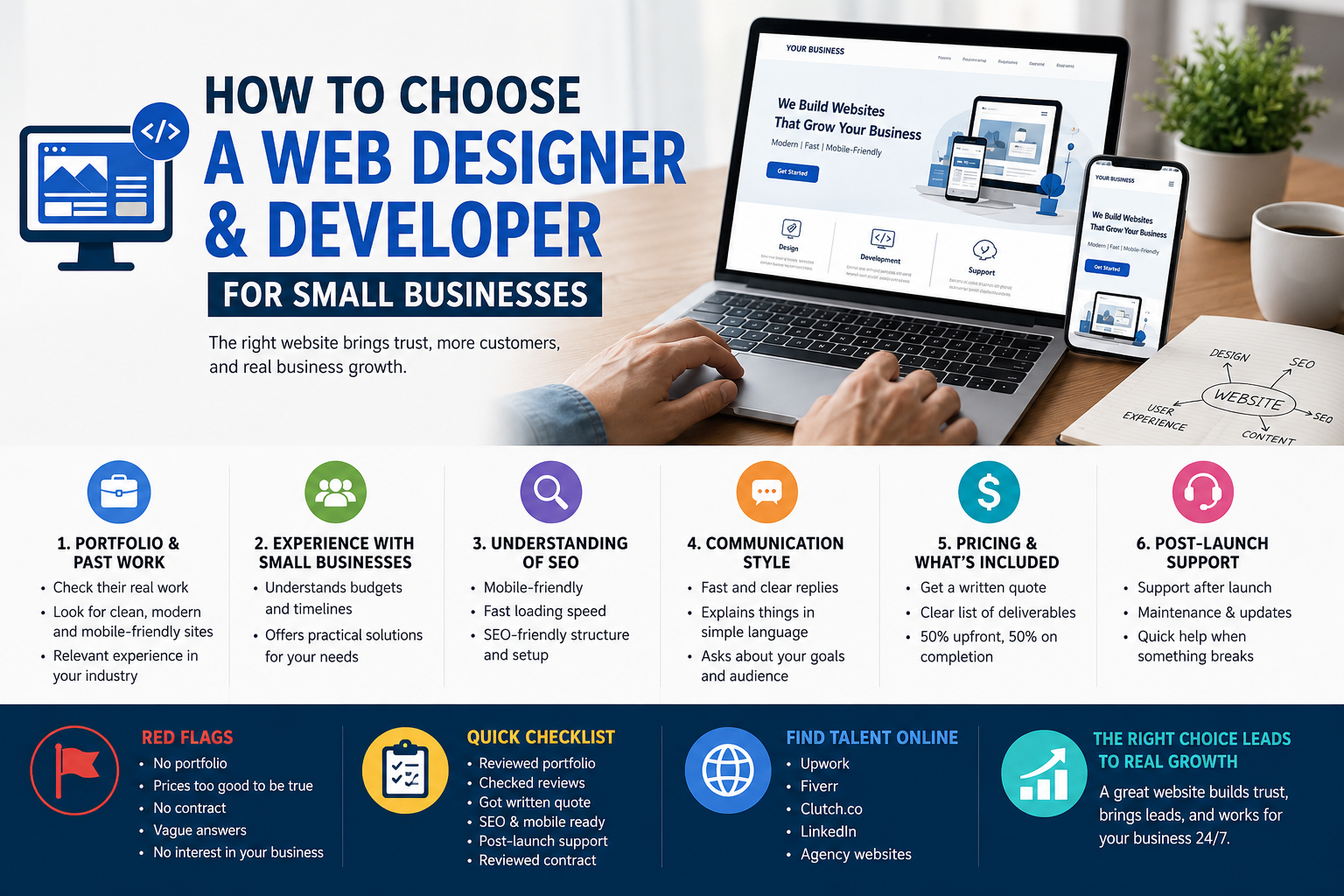
    Finding the right company for web design and development is not easy, especially when you have a limited budget, no technical background, and too many options to choose from. Most small business owners either overpay, pick the wrong person, or end up with a website that does not bring any results. This article will help you avoid all of that. You will learn exactly what to look for, what questions to ask, and how to make the right choice whether you are hiring locally or working with someone online from anywhere in the world.

    Don’t risk your brand with amateur design. Skip the guesswork and partner with certified experts who build high-performance, secure, and custom digital storefronts. Claim Your Free Website Strategy & UX Consultation Today

    Why Web Design and Development Matters for Small Businesses

    Most customers today search online before they buy anything. If your website looks unprofessional, loads slowly, or is hard to use on a phone they will leave and go to your competitor. A well-built website builds trust, brings in leads, and works for your business 24 hours a day.

    These numbers show one clear thing: your website is not optional. It is your most important marketing tool.

    Web Designer vs Web Developer Know the Difference

    Web Designer: Focuses on how the website looks layout, colours, fonts, and overall feel.

    Web Developer: Focuses on how the website works the code behind buttons, forms, and page speed.

    Full-Stack Professional: Handles both design and development. For most small businesses, this is the most practical and affordable option.

    Role Main Job Best For
    Web Designer Visual appearance Branding, look and feel
    Web Developer Coding and functionality Features, speed, security
    Full-Stack Both design and code Small businesses, tight budgets

    Key Factors to Consider When Choosing a Web Professional

    1. Portfolio and Past Work

    What to look for: Always ask to see real examples of websites they have built before. A strong portfolio shows their skills, style, and experience.

    • Do the sites look clean and modern?
    • Do they load fast on both desktop and mobile?
    • Have they worked with businesses in your industry?
    • Are the sites easy to navigate?

    If a professional cannot show you at least 3 to 5 real examples, that is a red flag.

    2. Experience With Small Businesses

    Why it matters: Small businesses have tighter budgets, faster timelines, and simpler needs. A professional who understands this will give you better value and a smoother experience.

    3. Understanding of SEO

    Bold point: A beautiful website that nobody can find on Google is useless.

    Your web professional should understand basic SEO Search Engine Optimisation. Ask:

    • Will the site be mobile-friendly?
    • Will page speed be optimized?
    • Will you set up basic meta titles and descriptions?
    • Will the site structure be search-engine friendly?

    You can also learn more about search engine optimization and how it improves visibility for business websites.

    Need a clear roadmap for your business website? Get a free, zero-obligation technical consultation and a tailored wireframe strategy from our senior architects. Claim Your Free Website Planning & SEO Audit

    4. Communication Style

    Simple rule: If they are hard to reach before the project starts, they will be impossible to reach once it does.

    Pay attention to:

    • How fast do they reply to your first message?
    • Do they explain things in plain language?
    • Do they ask questions about your business and goals?

    Good communication is not a bonus, it is essential.

    5. Pricing and What Is Included

    Pricing for web design and development varies depending on the scope of your project, the features you need, and the team you choose to work with. Before you commit, always ask for a detailed proposal that clearly lists what is included, number of pages, design revisions, hosting setup, SEO basics, and post-launch support.

    Project Type Price Range (USD) What Is Included
    Starter Website $500 – $1,500 Up to 5 pages, basic design, contact form
    Business Website $1,500 – $5,000 Up to 10 pages, custom design, SEO setup, mobile-friendly
    Advanced Website $5,000 – $15,000 Custom features, e-commerce, integrations, full SEO
    Enterprise Website $15,000+ Complex systems, large-scale design, ongoing support

    Important: A higher price does not always mean better quality. Focus on what is included in the package, the team’s past work, and whether they understand your business goals not just the number on the invoice.

    6. Post-Launch Support

    What most people forget to ask: What happens after the website goes live?

    Ask:

    • Do you offer a support period after launch?
    • What does ongoing maintenance cost?
    • How do I reach you if something breaks?

    A professional who offers clear post-launch support is worth far more than one who disappears the day the site goes live.

    You can also explore why website maintenance and support matter for long-term business growth.

    Red Flags to Watch Out For

    No portfolio: They cannot show you any real work they have done.

    Prices too good to be true: Extremely low quotes almost always mean low quality or hidden fees later.

    No contract: Always insist on a written agreement before work begins.

    Vague answers: If they cannot explain their process in simple words, that is a problem.

    No questions about your business: A good professional always wants to understand your goals and industry.

    Pressure to decide immediately: Rushing you into a decision is never a good sign.

    Where to Find Reliable Web Professionals Online

    Since web design and development services are fully available online, you are not limited to your local area. You can find skilled professionals through:

    • Upwork Large pool of freelancers with verified reviews
    • Fiverr Good for smaller, defined projects
    • Clutch.com Verified agency reviews and rankings
    • LinkedIn Professional profiles with work history

    Before hiring, it also helps to review a detailed guide to building a high-performing business website so you understand the standards your project should meet.

    FAQs

    How much should a small business spend on a website?

    A basic small business website typically costs between $1,000 and $5,000 when hiring an experienced freelancer. Agencies charge more usually $3,000 to $15,000. Always get multiple quotes and compare what is included, not just the price.

    How long does it take to build a small business website?

    A simple 5 to 8 page website usually takes 3 to 6 weeks. A more complex site with an online store or booking system can take 8 to 16 weeks. The timeline also depends on how quickly you provide content like text and images.

    Can I hire a web professional from another country?

    Yes. Web design and development is a fully online service. Many small businesses worldwide hire remote professionals through Upwork or Fiverr and get excellent results. Just make sure they have strong reviews, clear communication, and a solid portfolio.

    What should be included in a web design contract?

    A proper contract should include: scope of work, number of pages, number of revisions, payment terms, project timeline, ownership of files, and cancellation terms. Never start without a signed agreement.

    How do I know if my web professional is doing a good job?

    Ask for regular updates at least once a week. They should share progress through screenshots or staging links so you can give feedback early and avoid surprises at the end.

    Conclusion

    Choosing the right company for web design and development does not have to be hard. Check their past work, read their reviews, ask the right questions, and get everything in writing before you start.

    Do not only focus on price. Focus on quality, communication, and someone who truly understands your business needs.

    Your website works for your business every single day all around the world. Make sure the right company builds it. When you are ready, Techxaro is here to help your small business grow online.

    Ready to Transform Your Digital Presence?

    Stop losing potential customers to slow, outdated layouts. Let’s build a fast, responsive, and SEO-optimized website that consistently converts visitors into paying customers.

    Claim Your Free Website Conversion & UX Audit Today

  • What Is Website Development? A Complete Beginner’s Guide

    What Is Website Development? A Complete Beginner’s Guide

    Website development is the foundation of today’s digital experience. It refers to the processes involved in building and maintaining websites, from writing markup and coding to network configuration and managing content systems. Whether you’re browsing an online store or reading a blog like this one, you’re interacting with the result of web development.

    Is your current website turning away mobile visitors or loading too slowly? Don’t let an outdated design stall your pipeline. Partner with an engineering team that builds for speed, security, and sales. 💻 Claim Your Free Technical Web Architecture & Performance Audit

    Understanding Website Development

    Website development encompasses the entire lifecycle of a website, including:

    It’s a broad field that includes both the visual aspects of a site (known as front-end development) and the behind-the-scenes functionality (back-end development).

    Front-End vs. Back-End Development

    If you’re considering a career in web development, you’ll often hear the terms front-end and back-end development.

    • Front-End Development involves languages like HTML, CSS, and JavaScript. This is what users see and interact with on a website.
    • Back-End Development focuses on server-side languages such as Python, PHP, Ruby, and Java. It handles databases, servers, and application logic.

    Both areas require different skills and mindsets, but they often work together to bring a website to life.

    Why is Web Development Important?

    It’s hard to overstate how central the web is to modern life. With over 5.5 billion people using the internet globally, websites have become essential for communication, commerce, education, and entertainment.

    Rapid Industry Growth

    The demand for skilled web developers is growing fast. According to projections, employment in web development will increase by 8% between now and 2033 faster than most other tech sectors. That makes it a promising and stable career choice in a constantly evolving industry.

    Business Needs and Flexibility

    Not every business hires a full-time developer. Many small to mid-sized companies rely on content management systems (CMS) like WordPress or Wix to build their sites using templates. These platforms offer fast, cost-effective solutions but behind every great CMS is a solid understanding of high-performing website development principles.

    Web Development vs. Web Programming

    Though often used interchangeably, web development and web programming are not the same.

    • Web Development includes everything: design, layout, coding, and even project management.
    • Web Programming is specifically about writing code. It focuses on data handling, processing user input, and creating dynamic site content.

    Think of it this way: all web programmers are web developers, but not all web developers are web programmers.

    Understanding this distinction helps when choosing a career path or assembling a development team.

    Web Development Basics And Key Concepts Explained

    Before diving into coding, it’s important to understand how the web works. Here are a few essential terms:

    What is a Website?

    A website is a collection of files stored on a server, a computer that hosts the site’s content. These servers are connected to the internet. Users access them through browsers like Chrome or Safari.

    What is an IP Address?

    An IP address is a unique set of numbers that identifies a device on the internet. Just like a street address, it tells the internet where to send data.

    What is HTTP?

    HTTP (Hypertext Transfer Protocol) is the protocol used to transfer data between a web server and a browser. It enables users to load websites, submit forms, and interact online.

    What is Coding?

    Coding is the process of writing instructions for computers in programming languages. It forms the backbone of both front-end and back-end development.

    What Does Front-End Mean?

    The front end is everything the user interacts with buttons, text, images, and layout. It’s often called the “client side” of a website.

    What Does Back-End Mean?

    The back end handles the logic behind the scenes. It manages databases, user authentication, and server requests basically, it makes the website work.

    What is a CMS?

    A content management system (CMS) allows users to create, manage, and publish content without needing to code. Popular CMS platforms include WordPress, Joomla, and Drupal.

    What is Cybersecurity?

    Cybersecurity protects websites and servers from cyber threats. It includes data encryption, firewalls, and secure coding practices to keep user information safe. Businesses investing in website maintenance and support reduce risks and improve long-term website stability.

    Stop Fighting Outdated Templates. Build an Asset that Converts.

    Ready to eliminate technical friction and unlock scalable growth? Let’s sit down, review your goals, and map out a clean web strategy tailored to your business.

    👉 Schedule Your Technical Web Discovery Call with TechXaro

    Final Thoughts

    Website development is a dynamic, rewarding field that plays a critical role in the digital world. Whether you’re designing the next popular web app or managing content for a small business, understanding the core principles of web development is essential. As the internet continues to grow, so will the opportunities for those ready to build its future.

    Businesses looking to improve visibility and online growth should also explore how SEO and digital marketing drive website traffic and invest in professional web design and development services for long-term success.

Let Us Contact You!

Free Consultation

Need Expert Services?

We deliver reliable, high-quality solutions tailored to your business needs, on time and on budget.

Or reach us directly
Free Consultation

Need Expert Services?

We deliver reliable, high-quality solutions tailored to your business needs, on time and on budget.

Or reach us directly