Category: Mobile Apps

  • Why Every Growing Business Needs a Custom Mobile App Development Service

    Why Every Growing Business Needs a Custom Mobile App Development Service

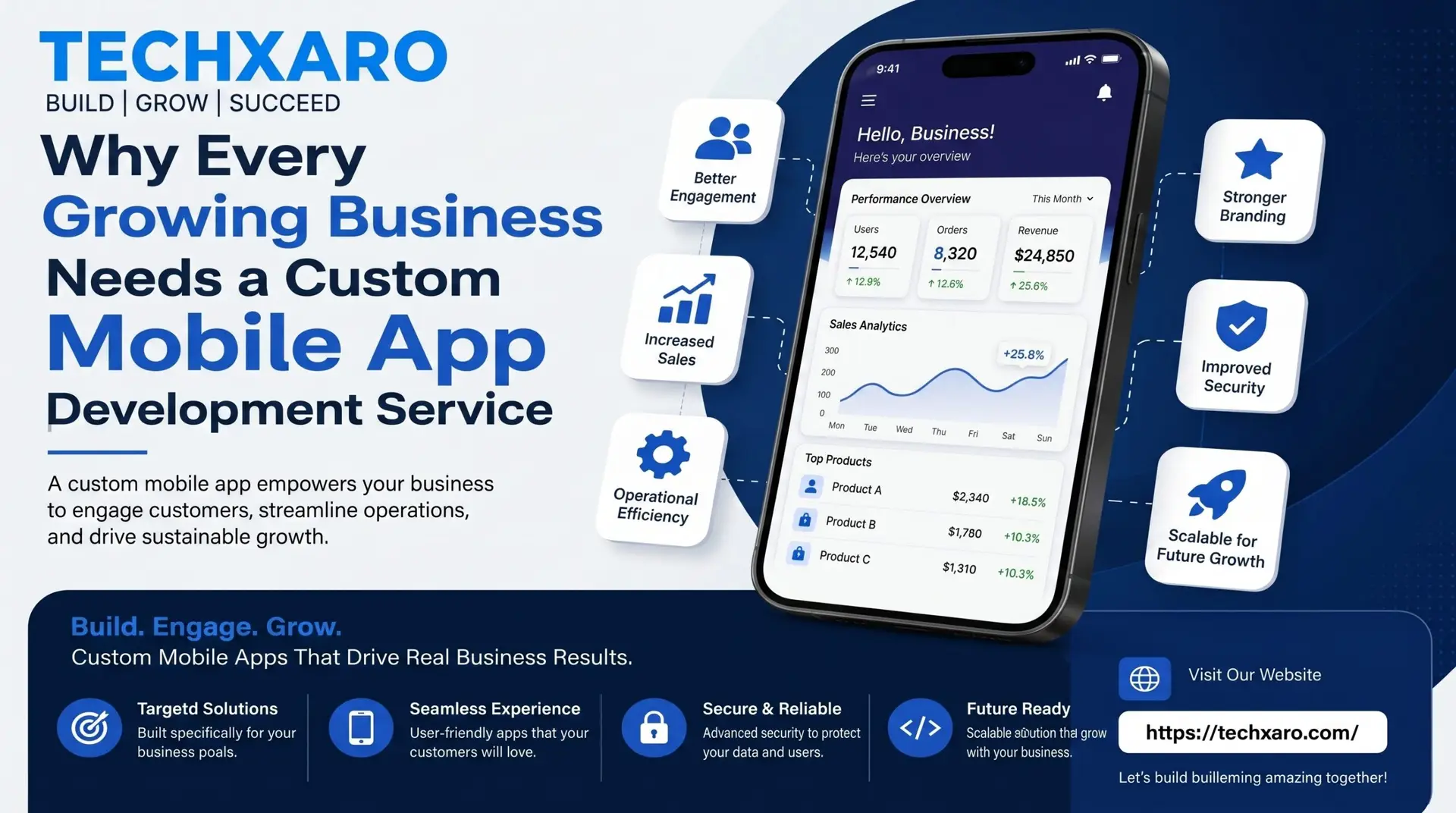
    In today’s digital marketplace, businesses are constantly searching for new ways to engage customers, improve operational efficiency, and stay ahead of competitors. One of the most effective ways to achieve these goals is through a custom mobile application. The purpose of this blog is to explain why investing in a Custom Mobile App Development Service has become essential for growing businesses. From improving customer experience to increasing brand visibility and revenue, a custom mobile app can provide long-term benefits that support sustainable business growth.

    Have a groundbreaking app idea or need to mobilize your business workflows? Don’t leave your technical architecture to chance. Get a clear execution roadmap from day one.
    Claim Your Free App Architecture & Discovery Consultation Call

    What Is Custom Mobile App Development?

    Custom mobile app development is the process of designing and building a mobile application specifically tailored to a business’s unique needs, goals, and target audience. Unlike off-the-shelf solutions, custom apps are created with personalized features, branding, and functionality.

    Businesses can develop custom applications for:

    • Customer engagement
    • Online shopping
    • Appointment scheduling
    • Internal operations
    • Employee management
    • Customer support

    A customized solution ensures the app aligns perfectly with business objectives and user expectations. Businesses planning digital expansion can also explore digital transformation strategies to future-proof long-term growth.

    Why Mobile Apps Matter More Than Ever

    Smartphones have become a central part of everyday life. Consumers use mobile devices for shopping, communication, entertainment, banking, and business interactions.

    Key Mobile Usage Statistics

    • Over 6 billion smartphone users worldwide.
    • Mobile devices generate the majority of internet traffic globally.
    • Consumers spend several hours daily using mobile applications.
    • Mobile commerce continues to grow year after year.

    These trends demonstrate why businesses must establish a strong mobile presence to remain competitive. Pairing mobile technology with SEO & Digital Marketing Services helps businesses maximize visibility and user acquisition.

    Benefits of Custom Mobile App Development for Growing Businesses

    Enhanced Customer Engagement

    A mobile app creates a direct communication channel between businesses and customers. Features such as push notifications, in-app messaging, and personalized offers help keep users engaged.

    Benefits include:

    • Instant customer communication
    • Personalized experiences
    • Improved customer satisfaction
    • Higher interaction rates

    The easier it is for customers to engage with your brand, the stronger your customer relationships become. Businesses focusing on user experience should also read about why user-centered design matters in mobile app development.

    Improved Brand Visibility

    A custom mobile app places your brand directly on customers’ devices. Every time users unlock their phones, they see your app icon, increasing brand recognition.

    Advantages include:

    • Increased brand awareness
    • Stronger customer recall
    • Better customer loyalty
    • Continuous brand exposure

    This constant visibility helps businesses remain top-of-mind among their target audience. Strong branding combined with
    Creative design services can further improve customer recognition and trust.

    Increased Customer Retention

    Retaining existing customers is often more cost-effective than acquiring new ones. Mobile apps encourage repeat interactions through loyalty programs, rewards systems, and personalized experiences.

    Popular retention features include:

    • Reward points
    • Membership programs
    • Exclusive offers
    • Personalized recommendations

    These features motivate customers to continue engaging with your business over time.

    Higher Sales and Revenue

    A mobile app simplifies the buying process by providing customers with convenient access to products and services. Faster navigation and secure payment options can significantly improve conversion rates.

    Revenue-driving features include:

    • One-click purchases
    • Mobile payment integration
    • Personalized product suggestions
    • Promotional campaigns

    A seamless mobile experience often leads to increased sales opportunities. Businesses with online stores can benefit from
    eCommerce solutionsnthat integrate directly with mobile applications.

    Want to Turn Your App Into a Revenue Machine?
    Get Your Free Mobile Growth Strategy Session

    Custom Apps vs Generic App Solutions

    Many businesses initially consider ready-made applications because they appear more affordable. However, custom mobile apps offer significantly greater flexibility and long-term value.

    Feature Custom Mobile App Generic App Solution
    Unique Branding Yes Limited
    Custom Features Fully Customized Restricted
    Scalability High Limited
    Security Enhanced Standard
    Third-Party Integration Flexible Limited
    Long-Term Growth Support Excellent Moderate

    Custom applications allow businesses to adapt quickly as customer needs and market demands evolve. Learn more about
    steps to build a successful mobile application before starting development.

    Better Customer Experience Through Personalization

    Modern consumers expect personalized experiences. Custom mobile apps allow businesses to deliver tailored content based on user behavior and preferences.

    Personalization Features

    User Profiles

    User profiles allow mobile apps to store customer preferences, browsing history, and past purchases. This information helps businesses provide a more personalized experience for each user. As a result, customers can access relevant content and services more quickly.

    Customized Recommendations

    Custom mobile apps can analyze user behavior to suggest products or services that match individual interests. Personalized recommendations improve the customer experience by making it easier to discover relevant options. This often leads to higher engagement and increased sales.

    Location-Based Services

    Location-based features enable businesses to deliver promotions, offers, and information based on a user’s geographic location. This makes marketing efforts more relevant and timely. Customers benefit from receiving content that is useful to their specific area.

    Personalized Notifications

    Personalized notifications allow businesses to send targeted messages based on customer preferences and activities. These notifications can include special offers, reminders, or important updates. Relevant messaging helps increase user engagement and encourages repeat interactions with the app.

    Operational Efficiency and Business Automation

    Mobile applications do more than serve customers. They also help businesses streamline internal operations. Companies investing in website maintenance and support services can maintain better performance and operational stability.

    Examples of Business Automation

    Appointment Scheduling

    Mobile apps can automate appointment bookings by allowing customers to select available time slots without manual assistance. This reduces scheduling conflicts and saves time for both customers and staff. Automated reminders can also help minimize missed appointments.

    Employee Communication

    Custom mobile apps improve communication by providing a centralized platform for updates, announcements, and team collaboration. Employees can receive real-time information and stay connected regardless of their location. This helps improve coordination and workplace efficiency.

    Inventory Management

    Mobile apps can track inventory levels in real time, helping businesses monitor stock availability and reduce errors. Automated inventory updates make it easier to manage products and prevent overstocking or shortages. This improves operational efficiency and decision-making.

    Customer Support Systems

    Apps can automate customer support through chatbots, ticketing systems, and self-service features. Customers can quickly find answers to common questions without waiting for assistance. This improves response times and enhances the overall customer experience.

    Order Tracking

    Order tracking features allow customers to monitor the status of their purchases in real time. Businesses can automatically provide shipping updates and delivery notifications through the app. This increases transparency, improves customer satisfaction, and reduces support inquiries.

    Automation Reduces Manual Tasks, Improves Productivity, and Minimizes Human Error

    Business automation eliminates many repetitive tasks that would otherwise require manual effort. By reducing human involvement in routine processes, businesses can improve accuracy, save time, and increase overall productivity. This allows employees to focus on more important tasks that contribute to business growth.

    Competitive Advantage in the Digital Marketplace

    Many businesses still rely solely on websites. A custom mobile app can help your company stand out from competitors by offering additional convenience and functionality.

    Competitive Benefits

    • Faster customer interactions
    • Better accessibility
    • Stronger brand positioning
    • Enhanced customer loyalty
    • Improved service delivery

    A well-designed app demonstrates innovation and commitment to customer experience. Businesses should also focus on building a high-performing business website to strengthen overall digital presence.

    Security and Data Protection

    Security is a major concern for both businesses and customers. Custom mobile app development allows organizations to implement advanced security measures tailored to their specific requirements.

    Security Features

    • Data encryption
    • Secure authentication
    • Multi-factor authentication
    • Secure payment processing
    • User access controls

    Strong security builds customer trust and protects sensitive information.

    Integration with Existing Business Systems

    Custom apps can seamlessly integrate with existing business tools and software.

    Common Integrations

    • CRM systems
    • ERP software
    • Payment gateways
    • Marketing automation tools
    • Customer support platforms

    Integration improves workflow efficiency and provides a unified business ecosystem. Businesses expanding online sales can also review eCommerce solutions for online business growth.

    Scalability for Future Growth

    As businesses grow, their technology requirements evolve. A custom mobile app can be expanded with additional features and functionality without requiring a complete rebuild.

    Scalable Features

    • New service offerings
    • Expanded user capacity
    • Additional payment methods
    • Advanced analytics
    • Multi-language support

    Scalability ensures your investment continues to deliver value as your business expands.

    Choosing the Right Custom Mobile App Development Service

    Selecting the right development partner is crucial for project success. Factors to Consider:Β 

    Industry Experience

    Choose a mobile app development company that has experience working with businesses in your industry. An experienced team understands industry-specific challenges and can provide solutions that align with your business goals. Their expertise often leads to better app performance and user satisfaction.

    Technical Skills

    A reliable development partner should have strong technical expertise in Android, iOS, and cross-platform app development. They should also be familiar with the latest technologies, frameworks, and security practices. This ensures your app is built efficiently and remains competitive in the market.

    Portfolio Review

    Reviewing a company’s portfolio helps you evaluate the quality of its previous work and development capabilities. Look for apps that are similar to your project in terms of functionality and design. Client testimonials and case studies can also provide insight into their reliability and success rate.

    Ongoing Support

    Mobile apps require regular updates, bug fixes, and performance improvements after launch. A development company that offers ongoing maintenance and support services can help keep your app secure, functional, and compatible with new devices and operating systems. Continuous maintenance ensures long-term success and user satisfaction.

    Ready to Build a Scalable Mobile App for Your Business? Book Your Free Mobile App Strategy Consultation

    Conclusion

    A custom mobile application is no longer a luxury reserved for large corporations, and at TechXaro, we believe every growing business deserves a powerful digital presence. A professionally built mobile app has become a strategic business tool that helps companies improve customer engagement, increase brand visibility, and drive sales. With TechXaro’s Custom Mobile App Development Services, businesses can move beyond generic solutions and embrace technology that truly reflects their vision. Our expert team ensures every feature, every design element, and every line of code is crafted with your business success in mind.

    FAQs

    Why does a growing business need a custom mobile app?

    A custom mobile app helps businesses improve customer engagement, increase brand visibility, and provide personalized experiences. It also supports long-term growth by offering features tailored to specific business needs.

    How much does custom mobile app development cost?

    The cost depends on factors such as app complexity, features, platform requirements, and development time. Simple apps are generally more affordable than enterprise-level solutions.

    Can a custom mobile app increase sales?

    Yes, mobile apps simplify the purchasing process, improve customer convenience, and support personalized marketing efforts. These factors often contribute to higher conversion rates and increased revenue.

    What platforms can a custom mobile app support?

    Custom mobile apps can be developed for Android, iOS, or both platforms using cross-platform development frameworks. The choice depends on business goals and target audiences.

    How long does it take to develop a custom mobile app?

    Development timelines vary depending on the project’s complexity and features. A basic app may take a few months, while advanced applications require longer development cycles.

    Is a mobile app better than a website?

    A website and mobile app serve different purposes. While websites are essential for online visibility, mobile apps provide a more personalized and convenient user experience for existing customers.

    From Idea to App Store. Partner with TechXaro.

    Stop letting technical execution bottlenecks delay your growth. Let’s sit down, review your business objectives, map out your functional requirements, and build a scalable app engineered to convert.
    Schedule Your Technical App Discovery Session with TechXaro


    Get Free Quote

  • Steps to Build a Successful Mobile Application

    Steps to Build a Successful Mobile Application

    Building a mobile app sounds exciting, and it is. But without a clear plan, most app ideas never make it past the idea stage. This blog exists for one reason: to give you a simple, honest roadmap for Mobile App Development so you can go from idea to a working app without wasting time or money. Whether you are a business owner, a startup founder, or someone exploring this space for the first time, these steps will help you understand exactly what goes into building an app that actually works.

    Is your website struggling to attract visitors and generate leads? Stop leaving your online visibility to chance. Let us build a data-backed blueprint that scales your customer acquisition.Β  Claim Your Free UX & SEO Audit to Uncover Hidden Drop-Off Points

    Why Mobile App Development Matters

    We are living in a mobile-first world and the numbers back that up. According to Statista, over 7.5 billion people use mobile devices worldwide. Google reports that more than 72% of all internet traffic now comes from mobile phones. The global app economy is projected to reach $935 billion by 2027, according to Mordor Intelligence. These are not just big numbers, they represent real customers who are spending more time on their phones than anywhere else. Businesses that show up on mobile connect with those customers directly.

    Step-by-Step Guide to Building a Successful Mobile App

    Building an app without a plan is like starting a road trip without a map. You might eventually get somewhere but it will cost you more time, more money, and a lot of frustration along the way. The steps below break the entire Mobile App Development process into simple, manageable stages. Follow them in order and you will always know where you are, what comes next, and why it matters.

    Step 1: Define Your Idea Clearly

    Every successful app starts with a clear idea not a vague one. Before you talk to any developer or designer, sit down and honestly answer three questions:

    • Problem: What problem does your app solve?
    • Audience: Who are your target users?
    • Goal: What do you want users to actually do inside the app?

    Most failed apps were built without clear answers to these questions. A focused idea leads to a focused product. A vague one leads to a bloated, confusing app that nobody uses.

    Step 2: Do Your Market Research

    Once you have your idea, go look at what already exists. Download two or three competitor apps. Use them as a real customer would. Read their reviews, not just the five-star ones, but the two- and three-star ones too. That is where the real feedback lives.

    Ask yourself: what are users complaining about? What features do they wish existed? What does the app do well that you could learn from? Your goal is not to copy what is already out there; it is to find the gap and fill it better.

    Step 3: Plan Your Features With an MVP

    One of the most common and costly mistakes in Mobile App Development is trying to build everything at once. Resist that urge. Instead, plan an MVP Minimum Viable Product. This is a lean version of your app that includes only the core features needed to solve the main problem.

    • Must-have features: The functions your app simply cannot work without
    • Nice-to-have features: Good ideas that can wait until after launch
    • Avoid: Anything that adds cost and time without adding real value to the user

    An MVP gets your app into real hands faster. And real users will tell you more in one week than you can figure out in months of planning alone.

    Step 4: Design the UI and UX

    A lot of people think design is about making things look nice. It is actually about making things work smoothly. There is a difference.

    UI (User Interface) is the visual layer of the colors, buttons, icons, fonts, and layout of every screen. UX (User Experience) is how the whole thing feels, how quickly a user can find what they need, how natural the flow feels, how little friction stands between them and completing a task. When crafting these interfaces, understanding why user-centered design matters in mobile app development is crucial for retention.

    Bad design is one of the top reasons users uninstall apps. You can have the best idea in the world, but if the app is confusing or slow to navigate, people will leave. Always test your designs with real people before development starts. Even showing a basic prototype to five friends can save you weeks of rework later. If you want to dive deeper into broader design concepts, explore why branding and creative design matter in business.

    Step 5: Choose the Right Platform

    This is a decision that affects your budget, timeline, and audience reach, so think it through carefully.

    Android gives you the widest reach. It dominates markets across South Asia, Africa, Southeast Asia, and most of the developing world. If your target audience is broad and global, Android is usually the starting point.

    iOS attracts a different kind of user. iPhone users in North America and Europe tend to spend more on apps and in-app purchases. If your business model depends on that kind of engagement, iOS should be your priority.

    Cross-platform development using Flutter or React Native is a smart middle ground for startups and small businesses. You build one codebase that runs on both Android and iOS, which saves time and cuts costs significantly without sacrificing too much on quality.

    There is no universally right answer here. It depends on who your users are and what your budget looks like.

    Step 6: Develop the App

    This is where the actual building happens. Development breaks down into three layers that all have to work together:

    • Frontend: Everything the user sees and touches, such as screens, buttons, animations, and transitions
    • Backend: The server, database, and logic running behind the scenes that the user never sees but always depends on
    • APIs: The connections that let your app talk to other services, payment systems, maps, social logins, and more

    The most reliable approach is agile development, building in short, focused stages called sprints, testing each piece before moving to the next. For businesses integrating retail elements, choosing the correct backend architectures or e-commerce solutions for your online business growth can set up a robust foundation.

    Step 7: Test the App Thoroughly

    Skipping testing is how good apps become bad reviews. Before your app goes anywhere near an app store, put it through proper testing:

    • Functional Testing: Does every feature work the way it should?
    • Performance Testing: Does it hold up when many users are on it at the same time?
    • Device Testing: Does it look and work correctly on different screen sizes and operating systems?
    • Security Testing: Is user data actually protected?

    Always test on real physical devices, not just simulators. Simulators are convenient, but they miss things that real devices catch. Your users will be on real devices, and your testing should reflect that.

    Step 8: Launch on the App Store

    Once testing is solid, it is time to go live. You will submit your app to the Google Play Store for Android users or the Apple App Store for iOS users, or both if you went cross-platform.

    Both platforms have a review process before your app goes public. Apple tends to be stricter. Make sure your app follows their guidelines around content, privacy, and performance, or you risk rejection and delays.

    Stop Chasing Clicks. Start Generating Customers. Ready to turn your website into a high-yielding lead-generation asset? Schedule a direct strategy session with TechXaro’s growth team today. We’ll diagnose your current traffic leaks and map out a clear path to measurable digital growth. Claim Your Free UX & SEO Audit to Uncover Hidden Drop-Off Points

    Native vs Cross-Platform: Quick Comparison

    Factor Native Cross-Platform
    Cost Higher Lower
    Performance Excellent Very Good
    Time to Build Longer Faster
    Maintenance Two codebases One codebase
    Best For Complex, high-performance apps Startups and MVPs

    FAQs

    How long does Mobile App Development take?

    A simple app typically takes 2 to 4 months. A more complex app with advanced features can take anywhere from 6 to 12 months, depending on team size, number of features, and the platforms involved. If you are looking to accelerate growth through alternative web avenues first, establishing a high-performing business website is an excellent parallel strategy.

    How much does it cost to build a mobile app?

    A basic app can start from $5,000. A feature-rich enterprise app can go well above $50,000. The right development partner helps you spend your budget where it actually matters. For growing brands, deploying a custom mobile app development service helps maximize long-term return on investment.

    Should I build for Android or iOS first?

    It depends on your audience. Android works better for broader global reach. iOS is the better choice if you are targeting premium users in North America or Europe.

    What is the difference between native and cross-platform development?

    Native apps are built separately for each platform and offer the best performance. Cross-platform apps share one codebase across Android and iOS, faster to build and more affordable, especially for startups.

    What is an MVP and why does it matter?

    An MVP is a lean first version of your app with only the essential features. It lets you launch fast, get real feedback, and improve without burning through your entire budget upfront.

    Conclusion

    Successful Mobile App Development is not about building something complex or impressive-looking. It is about solving a real problem in a way that feels simple and reliable to the people using it. Follow these steps from sharpening your idea all the way through to post-launch improvements and you give yourself a real chance at building something users actually stick with.

    If you are ready to get started, TechXaro offers complete Mobile App Development services UI/UX design, iOS and Android development, testing, and long-term support. Bring your idea and let the right team help you build it the right way. Additionally, keeping your mobile and desktop ecosystem running requires proper infrastructure, which highlights why maintenance and support matter for sustainable operational health.

    Get a Free App Development Cost Estimate

  • Why User-Centered Design Matters in Mobile App Development

    Why User-Centered Design Matters in Mobile App Development

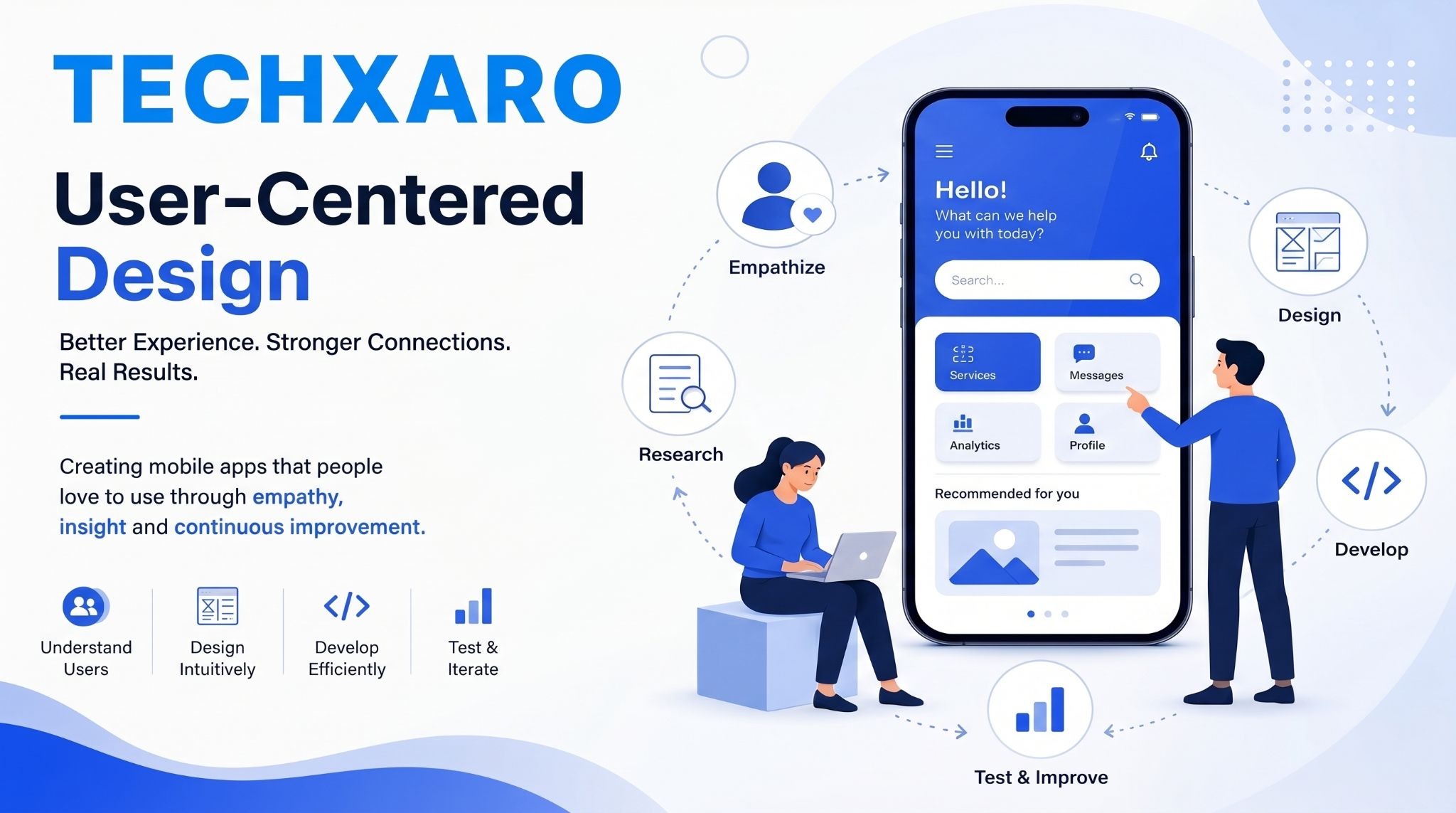
    In the world of Mobile App Development, building an app that functions well is only half the battle. The other half, and arguably the more important half, is building an app that people actually enjoy using. User-centered design is the philosophy that places the needs, behaviors, and expectations of real users at the heart of every design and development decision. This blog explores why user-centered design is not just a design trend but a fundamental approach that determines whether a mobile app succeeds or gets abandoned.

    Don’t let your app build be a shot in the dark. Partner with design engineers who place user psychology and seamless UI/UX at the core of your product. Launch Your High-Converting App with TechXaro’s Mobile App Development Experts

    What is User-Centered Design?

    User centered design (UCD) is an approach to building digital products where the end user’s needs, goals, and limitations are prioritized throughout the entire development process, from the initial concept all the way through to post launch improvements.

    Core principles of user centered design:

    • Empathy: Understanding users deeply before making design decisions
    • Iteration: Continuously testing, learning, and improving based on real feedback
    • Clarity: Designing interfaces that are intuitive and easy to navigate
    • Accessibility: Ensuring the product works for users of all abilities and backgrounds
    • Consistency: Delivering a predictable, reliable experience across all screens and interactions

    Why User Centered Design Is Critical in Mobile App Development

    The Stakes Are High in a Crowded Market

    The global app market is more competitive than ever. Millions of apps are available across major platforms, and users have very little patience for poor experiences.

    Global Mobile App Development stats that tell the story:

    Stat Figure
    Total apps available on Google Play (2024) Over 3.5 million
    Total apps available on Apple App Store (2024) Over 1.8 million
    Average time before a user abandons a slow app 3 seconds
    Users who uninstall apps due to poor UX 88%
    Increase in conversions with good UX design Up to 400%
    Businesses reporting better retention with UCD Over 70%

    The Cost of Ignoring User Experience

    Many businesses make the mistake of treating design as an afterthought in Mobile App Development, something to be polished after the core features are built. This approach consistently leads to costly problems down the line.

    Have a groundbreaking app idea but don’t know where to start? Get an expert breakdown of your app architecture, user flow map, and a transparent cost estimate completely free. Claim Your Free Mobile App Strategy Session with TechXaro

    What happens when user experience is ignored:

    • High uninstall rates: Users delete apps that confuse or frustrate them within minutes
    • Negative reviews: Poor experiences are shared publicly and damage brand reputation
    • Low engagement: Without an intuitive design, users do not explore the app’s full value
    • Increased support costs: Confusing interfaces generate more customer service requests
    • Wasted development budget: Fixing UX problems after launch costs significantly more than designing right from the start

    Key Elements of User-Centered Design in Mobile Apps

    Intuitive Navigation Making It Effortless

    If a user has to think too hard about how to use an app, the design has already failed. Navigation should feel natural and require minimal effort. Users should be able to find what they need within one or two taps without confusion.

    Principles of intuitive mobile navigation:

    • Familiar patterns: Use navigation structures users already know and expect
    • Clear labeling: Every button and menu item should communicate its purpose instantly
    • Minimal steps: Reduce the number of actions needed to complete any task
    • Visual hierarchy: Guide the user’s eye to the most important elements first

    Performance and Speed Design Goes Beyond Visuals

    User-centered design is not just about how an app looks it is about how it performs. A beautifully designed app that loads slowly or crashes frequently will lose users just as quickly as an ugly one.

    Performance benchmarks users expect:

    Performance Factor User Expectation
    App load time Under 2 seconds
    Screen transition speed Instant or near instant
    Crash frequency Zero tolerance for regular crashes
    Offline functionality Available where possible
    Battery and data usage Minimal drain on device resources

    Accessibility Designing for Everyone

    A truly user-centered app works for all users, not just the majority. Accessibility in Mobile App Development means ensuring that people with visual, hearing, motor, or cognitive differences can use the app without barriers.

    Accessibility features that matter:

    • Text scaling: Supporting larger font sizes for users with visual impairments
    • Color contrast: Ensuring text and elements are readable for color blind users
    • Screen reader compatibility: Making the app fully navigable through assistive technology
    • Simple language: Using clear, plain language that is easy for all users to understand

    Continuous Testing and Iteration

    User-centered design is never truly finished. The most successful apps in the world are constantly evolving based on how real users interact with them. Testing is not a one-time event it is an ongoing commitment.

    Types of testing used in user-centered mobile app development:

    • Usability testing: Watching real users navigate the app to identify friction points
    • A/B testing: Comparing two versions of a feature to see which performs better
    • Beta testing: Releasing early versions to a limited audience for real-world feedback
    • Analytics review: Using data to understand where users drop off or disengage

    The Business Case for User-Centered Design

    Investing in user-centered design is not just the right thing to do for users; it is a smart business decision with measurable returns.

    Business benefits of user-centered mobile app development:

    • Higher retention rates: Users who enjoy an app keep coming back, reducing the need for constant acquisition spending
    • Better reviews and ratings: Positive app store ratings drive organic downloads without additional marketing costs
    • Increased revenue: Smooth, intuitive experiences make users more likely to complete purchases or upgrades
    • Stronger brand loyalty: When users feel understood, they trust the brand behind the product

    Techxaro Building Apps With the User at the Center

    At Techxaro, user-centered design is not an optional feature it is built into every stage of the Mobile App Development process. From initial discovery and research through to launch and ongoing improvement, the focus remains on creating digital experiences that genuinely serve the people using them. For businesses across the globe looking to invest in mobile solutions that actually work, starting with the user is always the right place to begin.

    What Businesses Should Prioritise Before Building an App

    Before beginning any Mobile App Development project, businesses should ensure the following foundations are in place:

    • Defined user personas: Who exactly is this app being built for?
    • Clear user goals: What does the user need to accomplish within the app?
    • Competitive research: What are similar apps doing well, and where are the gaps?
    • Accessibility standards: Is the app being designed for all users from the start?

    Stop bleeding users to clunky interfaces and complicated setups. Let’s create a fast, stunning, and highly engaging mobile product that your customers will love to use every single day.

    πŸ‘‰ Get a Custom Quote and Build Your Mobile App with TechXaro Today

    FAQs

    Q1. What is user centered design in Mobile App Development?

    User centered design in Mobile App Development is an approach that prioritizes the needs, behaviors, and expectations of real users throughout the entire design and development process. Rather than building features based on assumptions, teams conduct research, test with real users, and continuously refine the product to ensure it genuinely serves the people using it.

    Q2. Why do so many apps fail despite having good features?

    Many apps fail not because of poor functionality but because of poor user experience. If an app is difficult to navigate, slow to load, or confusing in its layout, users will abandon it regardless of how useful its features might be. User centered design addresses this by ensuring the experience is just as strong as the functionality.

    Q3. How does user centered design affect app retention rates?

    Apps designed with the user in mind consistently achieve higher retention rates. When users find an app intuitive, fast, and genuinely helpful, they return to it regularly. Research consistently shows that improving UX can increase retention by a significant margin, reducing the cost of re acquiring lapsed users.

    Q4. Is user centered design only relevant for large apps?

    Not at all. User centered design is equally important for small and simple apps. In fact, for businesses with limited budgets, getting the user experience right from the start is even more critical because there is less room to absorb the cost of post launch redesigns.

    Q5. How long does user research take in the app development process?

    The time required for user research depends on the complexity of the project. For most business apps, an initial research phase of two to four weeks is sufficient to gather meaningful insights. However, user research is not a one time activity it should continue throughout the life of the product through testing and feedback collection.

    Conclusion

    User centered design is not a luxury reserved for the world’s biggest tech companies. It is a fundamental approach that any business investing in Mobile App Development at any scale should embrace from day one. When users feel understood, respected, and well served by a digital product, they engage more, stay longer, and trust the brand behind it more deeply. In a global market where competition is fierce and user patience is limited, putting people at the center of the design process is one of the smartest investments a business can make.

Let Us Contact You!

Free Consultation

Need Expert Services?

We deliver reliable, high-quality solutions tailored to your business needs, on time and on budget.

Or reach us directly
Free Consultation

Need Expert Services?

We deliver reliable, high-quality solutions tailored to your business needs, on time and on budget.

Or reach us directly