Category: Digital Marketing

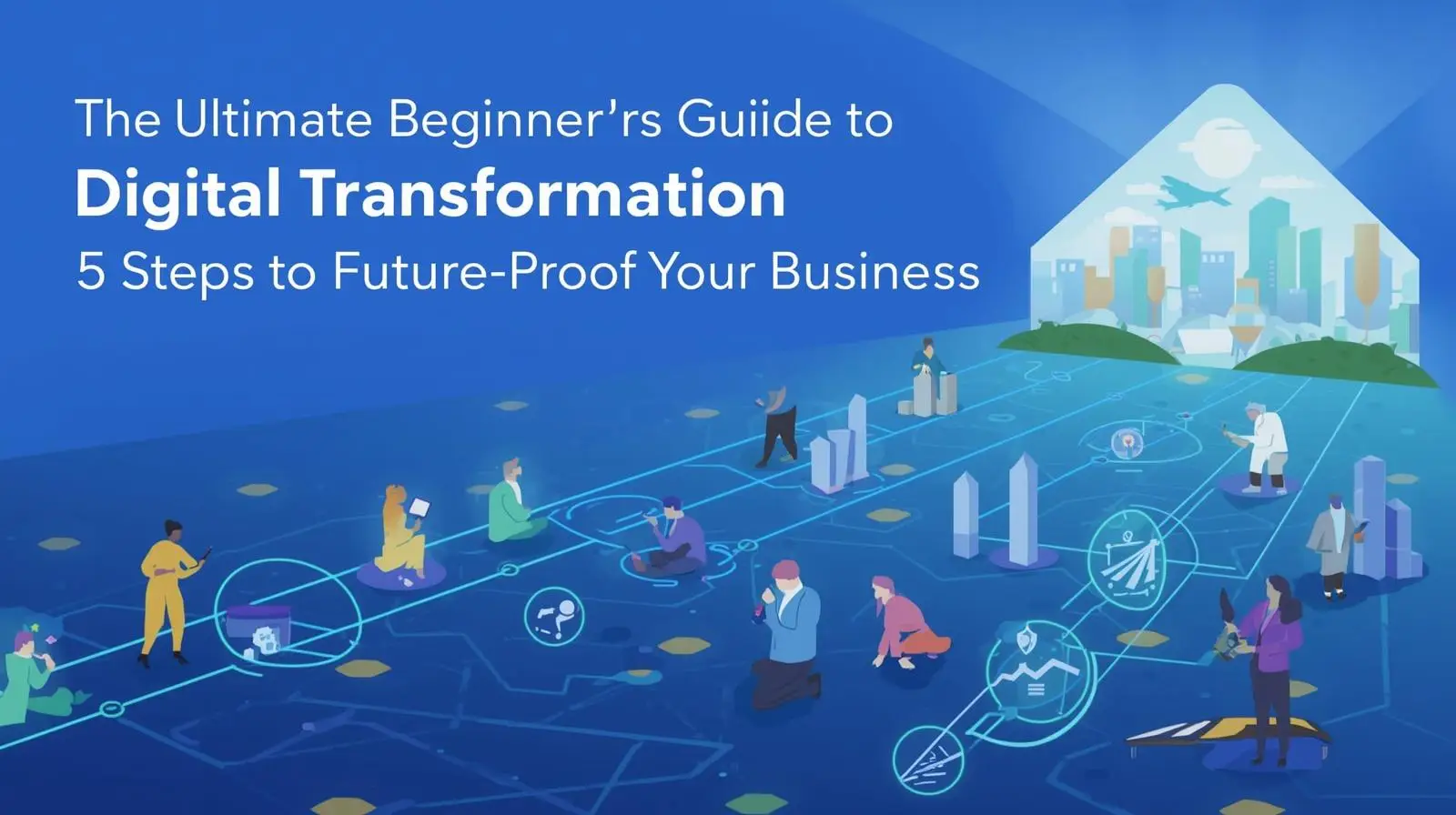
  • The Ultimate Beginner’s Guide to Digital Transformation Strategies: 5 Steps to Future-Proof Your Business

    The Ultimate Beginner’s Guide to Digital Transformation Strategies: 5 Steps to Future-Proof Your Business

    Think back to the last time you rented a movie from a physical store. It has probably been a while. Blockbuster was once the undisputed king of home entertainment, boasting thousands of stores worldwide. But they missed a massive shift in how people wanted to consume media. Netflix came along, embraced the power of the internet, and changed how we watch TV forever. Blockbuster stayed stuck in the past, and we all know how that story ended. That shift is called digital transformation.

    It sounds like a complicated tech buzzword, but it is actually a very simple concept. It is not just for tech giants or Silicon Valley startups anymore. Today, every local bakery, clothing brand, and neighborhood accountant needs a clear digital strategy to survive and thrive.

    Transform Your Business Today: Don’t let your operations fall behind like Blockbuster. Get My Free Growth Strategy Session Now. Let’s build your high-converting online presence. (Zero commitment. 100% actionable data.)

    What is Digital Transformation? (And Why It Isn’t Just About Tech)

    At its core, digital transformation means using modern technology to fundamentally change how a business operates and delivers value to its customers.

    But here is the biggest secret in the business world: digital transformation is not actually about technology. It is about people, culture, and mindset.

    Buying expensive software will not fix a broken business model. True transformation happens when a company changes its culture to constantly challenge the status quo, experiment with new tools, and get comfortable with adapting to change.

    Digitization vs. Digitalization vs. Digital Transformation

    People often mix these three terms up, but they mean very different things. Let us clear up the confusion with a quick, real-world example:

    Digitization: Converting physical information into digital formats.

    Example: Scanning a paper receipt and saving it as a PDF on your computer.

    Digitalization: Using digital data to make your current work faster and easier.

    Example: Uploading that PDF receipt to an accounting app so your finance team can view it online.

    Digital Transformation: Reshaping your entire business model based on technology.

    Example: Setting up an automated system where customers buy online, inventory updates instantly, and an AI tracker handles your taxes without anyone touching a piece of paper.

    Why Outdated Workflows Are Costing Your Business Money

    The business world moves fast. If you do not adapt, you risk becoming obsolete. Global spending on digital transformation is reaching trillions of dollars annually.

    Here is why companies are investing so heavily in going digital:

    1. Modern Customers Expect Instant Gratification

    We live in an era of instant gratification. We expect to track food delivery in real-time, click a button to call a ride, and get instant customer support.

    If your business requires customers to print a form, sign it, and fax it back, they will quickly leave you for a faster competitor. Upgrading your user experience through targeted SEO and digital marketing solutions ensures your brand shows up exactly where your modern customers are looking.

    2. Smarter Decisions Remove the Guesswork

    In the past, business owners had to rely on gut feelings to make big decisions. Today, digital tools gather data on everything from what products sell best on Tuesdays to how long users stay on your website. This data gives you a clear roadmap for growth.

    3. Automated Tasks Create Happier, More Efficient Employees

    Nobody enters the workforce hoping to spend eight hours a day copy-pasting numbers from one spreadsheet to another. Automating boring, repetitive tasks frees up your employees to focus on creative, high-value projects that actually grow the business with custom mobile app development solutions.

    5 Practical Steps to Build a Future Proof Digital Strategy

    Building a strategy can feel overwhelming when you see hundreds of tools available. Let us break it down into five manageable steps that any organization can follow.

    Step 1: Fix Your Culture and Mindset First

    You cannot build a digital business if your team is terrified of change. Leaders must communicate why the change is happening. Show your team how new tools will make their daily work easier, rather than making them feel like their jobs are threatened.

    Step 2: Map the Customer Journey to Eliminate Friction

    Put yourself in your buyer’s shoes. Walk through the exact steps a customer takes to find, choose, and buy from your business.

    Look for friction points. Are there long wait times? Is your website hard to use on a mobile phone? Fix those digital gaps first. If your platform feels outdated, it might be time to review The Ultimate Website Redesign Guide to revamp your site without losing existing customers.

    Step 3: Pick Purpose Driven Tools (Not Just the Shiny Ones)

    Do not buy a tool just because it is trending on social media. Focus on core technologies that solve your specific business problems:

    • Cloud Computing: Storing data online so your team can work securely from anywhere.
    • CRM Systems: Customer Relationship Management tools (like Salesforce or HubSpot) that track all client chats and sales leads.
    • Automation Software: Tools that send automatic email receipts, follow-up messages, or social media posts.

    Step 4: Train and Upskill Your Team

    A million-dollar software system is completely useless if your team does not know how to log in or use its features. Allocate time and budget for hands-on training. Empower your employees to master the new tools, which boosts their confidence and productivity.

    Step 5: Start Small, Then Scale Up

    Do not try to change your entire company overnight. Pick one small, high-impact problem to solve. Once that succeeds and the team sees the benefits, use that momentum to tackle bigger projects like shifting your entire inventory system to the cloud.

    Need Expert Help Scaling Digitally?
    Book Your Free Digital Growth Consultation and discover the fastest way to modernize your business operations.

    How Real Businesses Scaled Using Digital Frameworks

    Domino’s Pizza: The Tech Company That Sells Pizza

    In 2008, Domino’s stock price hit an all-time low. Customers complained about the food quality, and ordering was a hassle. The leadership team decided to completely reinvent the brand as an “e-commerce company that delivers pizza.”

    They created the famous Domino’s Tracker, allowing hungry customers to watch their pizza move from the oven to their doorstep. They made it possible to order via text message, voice assistants, smart TVs, and even smartwatches. Today, the vast majority of their sales come through digital channels.

    Your Local Coffee Shop

    Transformation does not require millions of dollars. Imagine a local coffee shop that used to rely entirely on cash and paper punch cards for customer loyalty.

    By introducing a simple mobile ordering app, customers can now order ahead and skip the morning line. The shop uses an iPad-based checkout system that tracks inventory automatically, letting the owner know exactly when they are running low on ingredients. That is a highly successful digital transformation on a local scale.

    Actionable Tips to Kickstart Your Journey Today

    If you want to kickstart your digital transformation journey today, use these quick tips:

    • Audit your current tools: Make a list of every software your team uses. Eliminate duplicate subscriptions and delete apps that cause confusion.
    • Listen to your frontline staff: The employees who answer customer calls or pack boxes know exactly where the operational bottlenecks are. Ask them what needs fixing.
    • Prioritize cybersecurity: As you move operations online, protecting customer data is your top priority. Use strong passwords, train employees on phishing scams, and turn on two-factor authentication (2FA).

    Frequently Asked Questions (FAQs)

    1. Is digital transformation expensive?

    It can be, but it does not have to be. Small businesses can start with budget-friendly Software-as-a-Service (SaaS) apps that cost a small monthly subscription. The key is starting small and scaling as you grow.

    2. Will digital transformation replace human workers?

    It replaces repetitive, manual tasks, not people. By automating data entry, basic scheduling, or simple sorting, your employees can focus on uniquely human-centric skills like customer empathy, creative design, and strategic problem-solving.

    3. How long does a digital transformation strategy take to implement?

    It is an ongoing journey. Technology changes constantly, so successful companies treat digital transformation as a continuous evolution where they regularly adapt and update their strategies over time.

    4. What is the biggest reason these strategies fail?

    The number one reason is a lack of cultural adoption. If leadership forces new software on a team without proper explanation, training, or cultural support, employees will simply reject the tool and go back to their old, inefficient ways of working.

    Ready to Streamline and Automate Your Business Operations?

    Transforming your business shouldn’t feel overwhelming. We combine technical expertise with real-world marketing results to help you capture targeted search traffic and convert casual visitors into loyal clients.

    To discover how your business can leverage modern digital channels, explore our breakdown on What Is SEO and Digital Marketing and Why Does Your Business Need Both? to align your marketing and operational goals perfectly.

    You can also explore our complete digital transformation services to scale your business with the right technology stack and growth strategy.

    Claim Your Specialized Marketing Consultation

    Take the guesswork out of scaling. Let’s audit your technical growth setup and build a customized roadmap for your brand.
    Claim Your Free Marketing Consultation Today

  • What Is SEO & Digital Marketing, and Why Does Your Business Need Both?

    What Is SEO & Digital Marketing, and Why Does Your Business Need Both?

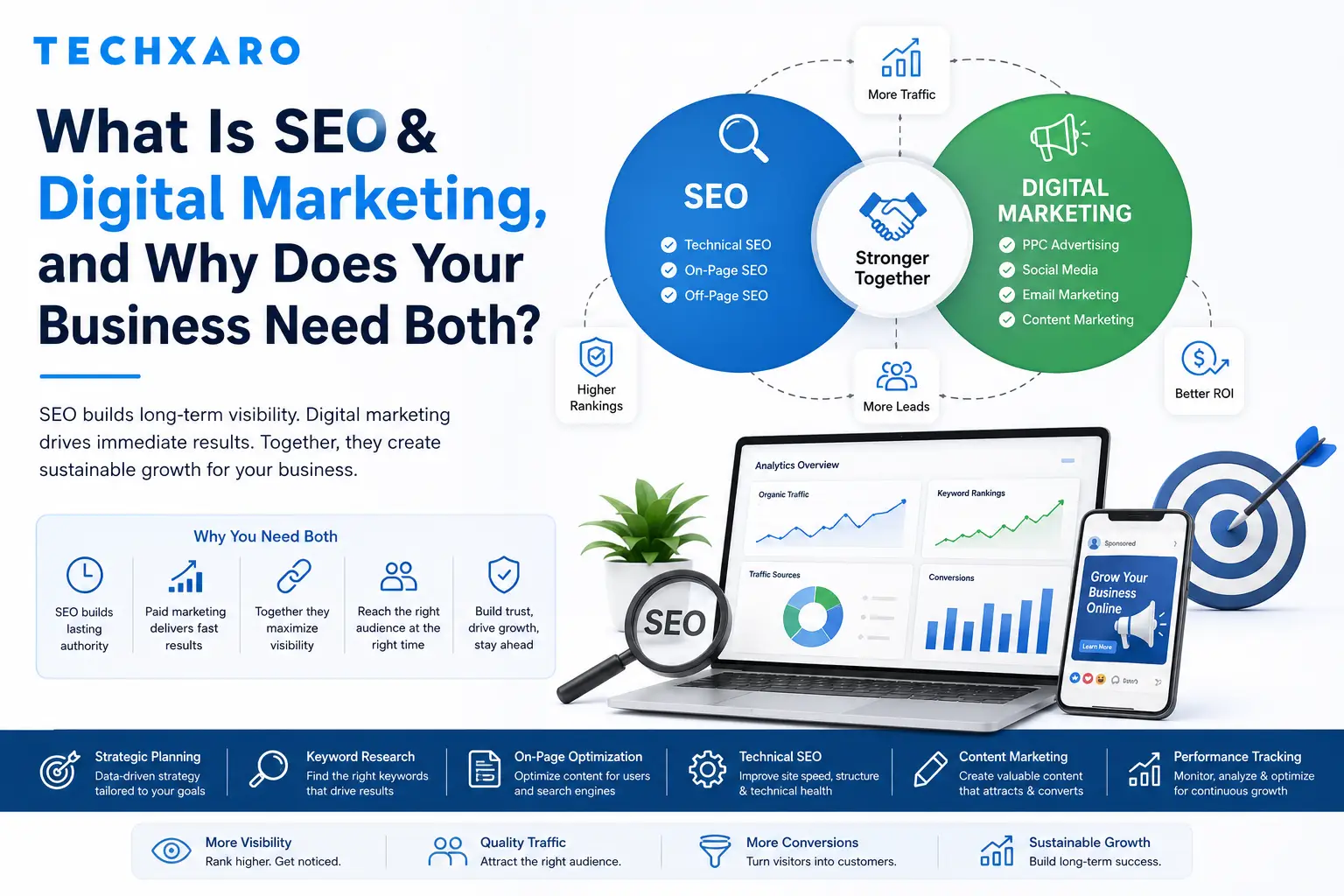
    For most businesses, having a website is no longer enough. Customers don’t just visit a site because they know it exists, they find it through search engines, social media, AI-powered answers, and paid ads. SEO and digital marketing are the two forces that determine whether your business shows up in those moments or stays invisible. This blog breaks down what each of these actually means, how they work together, and why relying on just one is no longer a sustainable growth strategy.

    Stop Guessing Your Growth Strategy

    Is your website losing valuable traffic to competitors right now? Don’t let potential customers pass you by. Explore TechXaro’s integrated SEO & Digital Marketing Services today and claim your Free Growth Strategy Audit to find exactly where your hidden revenue is hiding.

    This comprehensive guide breaks down what each of these strategies actually means, how they work together, and why relying on just one is no longer a sustainable growth plan in today’s competitive landscape.

    What Is SEO?

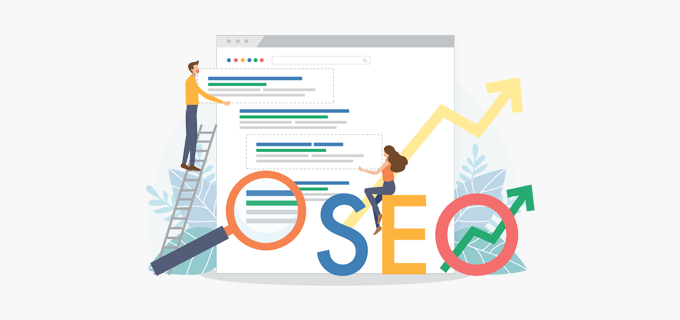
    SEO, or Search Engine Optimization, is the practice of improving a website so it ranks higher in search engine results for relevant queries. It covers everything from technical site structure and page speed to keyword research, content quality, and backlinks from other reputable websites.

    SEO is a long-term strategy. Rather than paying for visibility, you’re earning it by making your website more relevant, trustworthy, and useful than competing pages. According to Google’s own Search Central documentation, the fundamentals of good SEO haven’t changed much: quality content, clear site structure, and technical accessibility remain at the core of how search engines evaluate websites.

    The Three Pillars of SEO

    Most SEO strategies are built around three core areas:

    • Technical SEO: site speed, mobile-friendliness, indexing, and structured data (schema markup)
    • On-Page SEO: Content quality, keyword targeting, headings, and internal linking
    • Off-Page SEO: Backlinks, brand mentions, and overall domain authority

    What Is Digital Marketing?

    Digital marketing is the broader umbrella that includes SEO, but also extends into paid advertising, social media, email campaigns, and content marketing across multiple channels. While SEO focuses on organic (unpaid) visibility, digital marketing includes both organic and paid strategies working toward the same goal: getting your brand in front of the right audience at the right time.

    Digital marketing channels typically include:

    • Pay-Per-Click (PPC) advertising on Google and social platforms
    • Social media marketing and community management
    • Email marketing and automated nurture campaigns
    • Content marketing across blogs, video, and other formats

    Businesses looking to strengthen online visibility should also explore how digital marketing and SEO drive web traffic for long-term growth.

    How SEO and Digital Marketing Work Together

    SEO and digital marketing aren’t competing strategies; they’re complementary parts of the same growth engine. SEO builds long-term, sustainable visibility, while digital marketing channels like PPC and social media generate faster, more immediate results.

    Factor SEO Digital Marketing (Paid/Social)
    Speed of results Slower (months) Faster (days to weeks)
    Cost over time Lower long-term cost Ongoing ad spend required
    Visibility type Organic, earned Paid or algorithm-driven
    Sustainability Compounds over time Stops when budget stops
    Best for Long-term brand authority Immediate traffic and promotions
    Trust factor Higher (users trust organic results) Lower (perceived as ads)

    When used together, paid campaigns can drive immediate traffic while SEO builds the foundation that keeps generating leads long after a campaign ends.

    Bridge the Gap Between Traffic and Revenue

    Driving traffic is only half the battle converting those visitors into paying customers is where the real revenue happens. At TechXaro, we don’t just build visibility; we build conversion funnels. See how our tailor-made SEO & Digital Marketing Solutions can turn your website into a 24/7 lead-generation machine.

    Get Your Free Conversion Strategy Session

    Why Your Business Needs Both, Not Just One

    Relying Only on SEO Leaves Gaps

    SEO takes time to show results, often three to six months or more before meaningful ranking improvements appear. If your business needs visibility now for a product launch, seasonal promotion, or new market entry SEO alone won’t move fast enough.

    Relying Only on Paid Marketing Is Expensive Long-Term

    Paid ads stop generating traffic the moment you stop paying. Without SEO working in the background, every new customer comes at an ongoing cost, and your business never builds the organic foundation that reduces dependency on ad spend over time.

    Search Itself Is Changing

    Search behavior is shifting beyond traditional Google results. AI-powered tools and generative search experiences are increasingly answering queries directly, which means businesses now need to think about how they’re cited and represented across AI models, not just in traditional search rankings. This emerging discipline, often referred to as AI Engine Optimization (AEO) or Generative Engine Optimization (GEO), is becoming a critical part of modern SEO strategy.

    Discover how businesses are adapting to AI-driven search in the AI era of SEO and digital marketing.

    A Combined Strategy Builds Compounding Growth

    When SEO and digital marketing work together, content created for SEO can be repurposed for social media and email campaigns, paid campaign data reveals which keywords and audiences convert best (informing SEO strategy), and brand visibility across multiple channels reinforces trust signals that search engines use to evaluate authority.

    Building an Integrated SEO & Digital Marketing Strategy

    A strong strategy typically follows a structured path:

    • Audit: Assess your current SEO performance, technical health, and existing marketing channels against competitors.
    • Strategy & Content Planning: Map out content clusters and campaigns based on what your audience is actually searching for.
    • Technical Foundation: Fix site speed, structure, and schema markup so search engines (and AI models) can understand your site clearly.
    • Authority Building: Earn backlinks, mentions, and PR coverage that build long-term domain trust.
    • Paid Amplification: Use PPC and social ads to accelerate visibility while organic strategies mature.
    • Continuous Optimization: Regularly review performance data and adjust based on algorithm changes and audience behavior.

    This is the same integrated approach outlined in TechXaro’s SEO & Digital Marketing Services, which combines technical SEO, AI search visibility, and full-funnel marketing into a single strategy rather than treating each channel in isolation. If your website also needs performance improvements, explore our guide on building a high-performing business website to strengthen your digital foundation.

    Frequently Asked Questions

    Is SEO still relevant with the rise of AI search tools?

    Yes. AI-powered search experiences still rely on well-structured, authoritative content to generate their answers. Strong SEO fundamentals, including clear site structure and quality content, directly influence whether your brand gets cited by AI models, making SEO arguably more important, not less.

    How long does SEO take to show results?

    Most businesses begin seeing measurable improvements within three to six months, though this varies based on competition, industry, and the current state of the website. SEO is a cumulative process; results tend to build and compound over time rather than appearing instantly.

    What’s the difference between SEO and PPC?

    SEO focuses on earning organic rankings through content, technical optimization, and authority building, with no direct cost per click. PPC involves paying for ad placements that appear immediately but stop generating traffic once the budget is exhausted.

    Can a small business benefit from both SEO and digital marketing?

    Yes. Small businesses often benefit the most from a combined approach, using PPC or social ads for immediate visibility while SEO builds a foundation that reduces long-term reliance on advertising costs.

    What is AEO and GEO, and why does it matter?

    AEO (AI Engine Optimization) and GEO (Generative Engine Optimization) refer to optimizing content so it’s accurately represented and cited by AI tools and generative search experiences. As more users get answers directly from AI models, ensuring your brand is recognized as a trusted source becomes an extension of traditional SEO.

    How do I know if my current digital marketing strategy is working?

    Key indicators include organic traffic growth, keyword ranking improvements, conversion rates from paid campaigns, and overall return on ad spend (ROAS). Regular reporting and analysis are essential to understanding which channels are driving real business results.

    Ready to Scale Your Digital Footprint?

    Don’t let a disjointed marketing strategy stall your business growth. Let’s integrate your search visibility, paid amplification, and conversion design into a unified, high-yielding strategy.

    Get Your Free Strategic Consultation & Site Audit Now and work with TechXaro to turn your traffic into measurable revenue.

  • SEO & Digital Marketing in the AI Era: What Businesses Need to Know

    SEO & Digital Marketing in the AI Era: What Businesses Need to Know

    The way people search for information online is changing rapidly. Traditional search engine optimization still matters, but it is no longer the whole picture. With AI-powered tools like Google’s Search Generative Experience (SGE) and ChatGPT reshaping how users discover businesses, brands need a more comprehensive, future-ready digital marketing strategy to stay competitive.

    This guide breaks down everything you need to understand about modern SEO and digital marketing: what it includes, why it matters, and how a well-executed strategy can drive real, measurable business growth.

    Is your website losing visibility to AI search engines? Don’t let your competitors capture your traffic. Partner with a team that builds future-proof growth.

    Claim Your Free UX & SEO Audit to Uncover Hidden Drop-Off Points

    What Is SEO and Why Is It Still Critical in 2026?

    Search Engine Optimization (SEO) is the process of improving your website’s visibility in organic (non-paid) search results. When someone searches for a product, service, or answer on Google, SEO determines whether your business appears on page one or gets buried on page five, where almost no one looks.

    Studies consistently show that the top three organic results on Google capture over 50% of all clicks. Businesses that invest in SEO are not just increasing traffic they are capturing high-intent users who are actively looking for what they offer.

    In 2026, effective SEO goes far beyond keyword placement. It now encompasses:

    • Technical site health: page speed, mobile optimization, Core Web Vitals, and crawlability
    • Semantic search: understanding user intent, not just matching keywords
    • Authority building: earning high-quality backlinks from relevant, trusted sources
    • Entity optimization: establishing your brand as a recognized entity in Google’s Knowledge Graph
    • AI search visibility: ensuring your content is cited in generative search results

    The Rise of AI Search: AEO and GEO Explained

    One of the most significant shifts in digital marketing over the past two years is the emergence of AI-powered search engines. Google SGE, Bing Copilot, and tools like ChatGPT and Perplexity are changing the way users get answers, often without ever clicking on a traditional search result.

    This has given rise to two new optimization disciplines that every forward-thinking business should understand:

    Answer Engine Optimization (AEO)

    AEO focuses on structuring your content so that AI-powered answer engines can extract and present it directly in response to user queries. This means using clear, question-and-answer formats, structured data (schema markup), and content that directly addresses specific search intents.

    Generative Engine Optimization (GEO)

    GEO goes a step further it focuses on making your brand the cited source when AI models generate answers. Businesses that invest in GEO are building brand authority that extends beyond traditional search rankings into the AI-generated answers users see every day. Brands that ignore AEO and GEO today risk becoming invisible in the AI search landscape that is rapidly becoming the default way people discover information online.

    Core Components of a Complete Digital Marketing Strategy

    Effective digital optimization is not a single tactic; it is an integrated system where every channel works together to attract, engage, and convert your target audience. Here are the key components every business should have in place:

    1. Advanced On-Page and Technical SEO

    The foundation of any digital marketing strategy starts with a technically sound website. This includes fixing crawl errors, optimizing page load speeds, implementing proper heading structures, and ensuring your site is fully mobile-friendly. Without this foundation, even the best content will struggle to rank. For a deep dive into building an optimized foundation, check out our comprehensive guide to building a high-performing business website.

    2. Content Marketing

    High-quality content is what earns you authority—both with search engines and with your audience. A strong content strategy includes blog posts that target specific search intents, pillar pages that establish topical authority, and landing pages optimized for conversions. If you’re looking to elevate your messaging, mastering the essential pillars of what is content writing is the best place to start.

    3. Performance Marketing (PPC)

    While SEO builds long-term organic growth, Pay-Per-Click advertising delivers immediate results. Platforms like Google Ads, Meta Ads (Facebook and Instagram), LinkedIn, and YouTube allow businesses to target specific audiences with precision and drive traffic and conversions quickly. Melding this with strategic SEO and digital marketing solutions ensures complete coverage across the entire search engine results page (SERP).

    4. Social Media Marketing

    Social media platforms are no longer just brand awareness channels they are full-funnel marketing ecosystems. A well-executed social media strategy builds community, drives engagement, and directly generates leads and sales through organic content and targeted paid campaigns.

    5. Email Marketing and Lead Nurturing

    Email marketing remains one of the highest-ROI digital channels available, with an average return of $36 for every $1 spent. Automated email sequences allow businesses to nurture leads from initial awareness through to purchase, delivering the right message at the right stage of the buyer journey without manual effort.

    6. Analytics and Conversion Rate Optimization (CRO)

    Data is the backbone of effective digital marketing. Without proper tracking and analytics, you are operating blind. Businesses that invest in proper conversion rate optimization—testing landing pages, CTAs, and user flows—consistently outperform those that simply drive traffic without measuring what happens next. This data architecture becomes especially critical when planning an overarching digital transformation strategy to future-proof your workflows.

    Advanced Digital Marketing Tactics for 2026

    Beyond the core channels, several advanced tactics separate high-performing digital marketing strategies from average ones:

    • Omni-channel consistency: Ensuring your brand message is unified across search, social, email, and paid channels for a seamless user experience.
    • Schema markup and structured data: Helping search engines understand your content with precision—critical for featured snippets and AI search citations.
    • Zero-click optimization: Capturing SERP real estate through featured snippets, knowledge panels, and People Also Ask boxes to build authority. Learn exactly how digital marketing and seo drive web traffic to understand this dynamic.
    • Semantic link building: Building topical authority through niche-relevant, contextually appropriate backlinks rather than generic links.
    • LLM visibility monitoring: Tracking how AI language models reference and recommend your brand in generative search responses.

    What Does a Successful Digital Marketing Process Look Like?

    Businesses that consistently achieve strong digital marketing results typically follow a structured, data-driven process:

    Step 1: Audit & Analysis – A thorough review of your current SEO performance, content gaps, technical issues, competitor landscape, and paid advertising performance.

    Step 2: Strategy Development – Building a custom roadmap that identifies which channels, content clusters, and campaigns will deliver the fastest and most sustainable ROI for your specific business.

    Step 3: Technical Foundation – Resolving all technical SEO issues and optimizing your site’s architecture before investing heavily in content or paid campaigns. If your platform is aging, you may need a clean blueprint like our ultimate website redesign guide to preserve your hard-earned rankings.

    Step 4: Content and Campaign Execution – Creating and publishing high-quality content while launching targeted paid campaigns across the appropriate channels.

    Step 5: Authority and Link Building – Building topical authority through strategic link acquisition, digital PR, and brand mentions across relevant platforms.

    Step 6: Measurement and Re-Optimization – Continuously tracking performance data, identifying what is working, and reallocating resources to the highest-performing channels.

    How to Know If Your Business Needs a Digital Marketing Partner

    Many businesses reach a point where managing digital marketing in-house is no longer enough to stay competitive. Here are the signs it may be time to work with a specialist:

    • Your website traffic has plateaued or is declining despite ongoing content efforts.
    • You are investing in paid ads but not seeing a clear, positive return on spend.
    • Your competitors are appearing in AI-generated search results and your brand is not.
    • You lack a unified strategy across SEO, content, social, and paid channels.
    • You are generating traffic but struggling to convert visitors into leads or customers.
    • Algorithm updates are regularly affecting your rankings with no clear recovery path.
    • You want to future-proof your digital presence against AI-driven search disruption.

    Ready to Build a Future-Proof Digital Marketing Strategy?

    Understanding SEO and digital marketing is the first step—but executing a comprehensive, integrated strategy that delivers consistent, compounding results requires expertise, the right tools, and a deep understanding of where search is heading next.

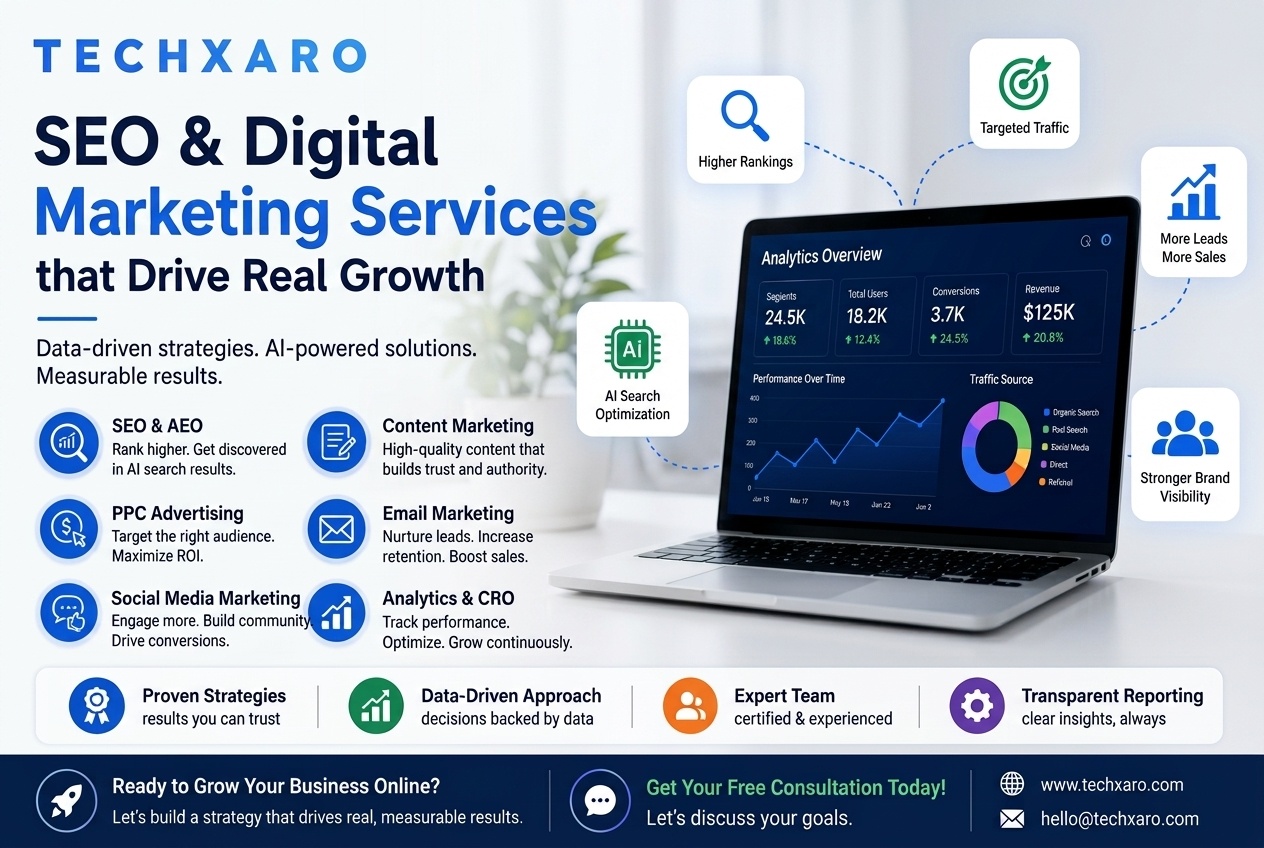
    At TechXaro, we specialize in full-funnel SEO & digital marketing solutions built for the AI era from advanced technical SEO and AEO/GEO optimization to high-ROAS paid campaigns and content strategies that drive long-term organic growth. Our approach is data-driven, fully integrated, and designed to deliver measurable results, not just reports.

    Stop Guessing Your Digital Growth Strategy. Start Scaling.

    Schedule a direct consultation call with our growth strategists. We’ll analyze your current site performance, spot hidden technical drop-offs, and design an actionable execution blueprint.

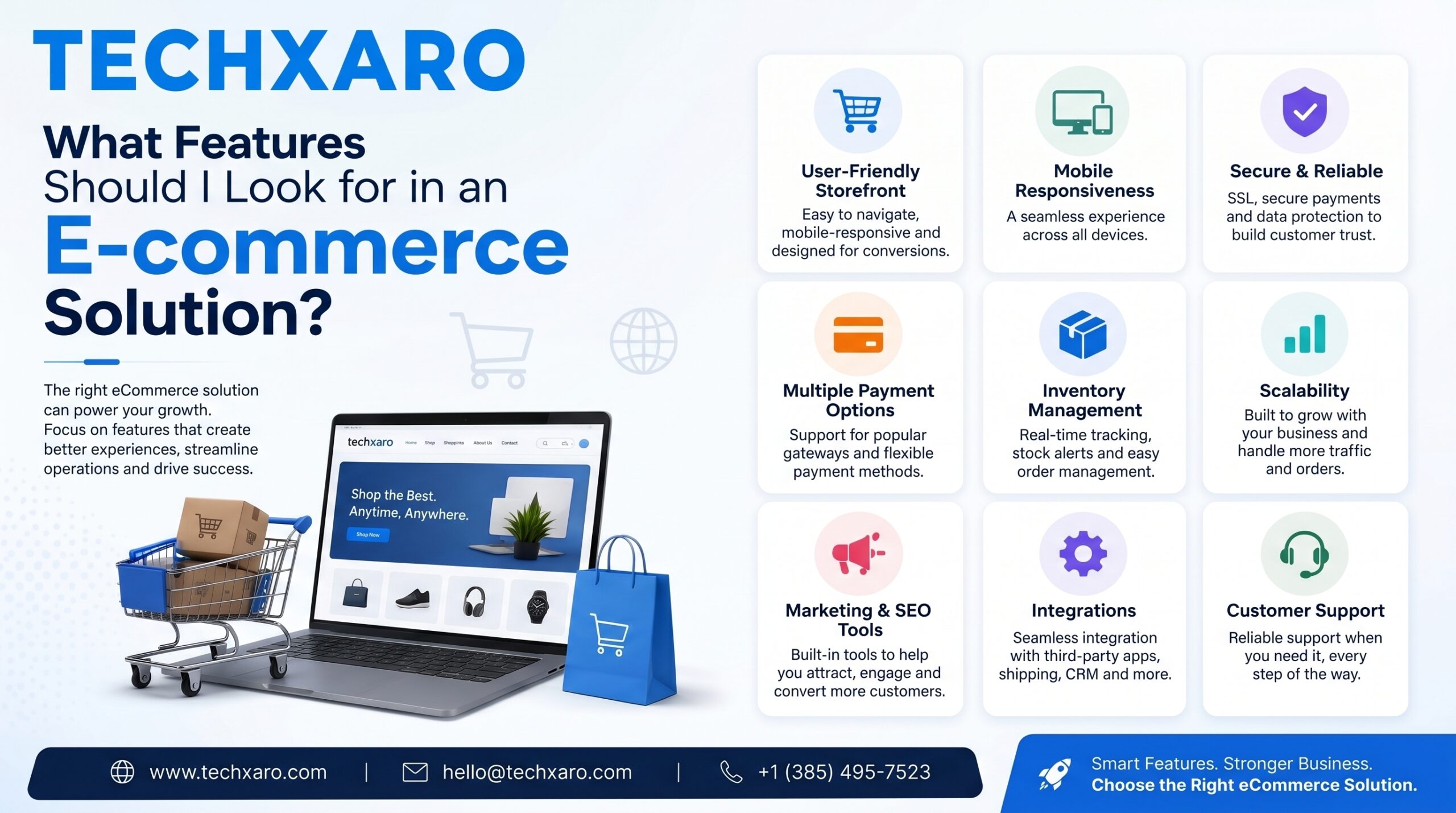
  • What Features Should I Look for in an Ecommerce Solution?

    What Features Should I Look for in an Ecommerce Solution?

    If you want to sell products online, you need the right e-commerce solution. But with so many platforms available, it can be hard to know what really matters. This blog explains everything in simple words so you can make a smart choice before picking a platform. Whether you are just starting out or already running a business, these features will help you sell more and grow your store anywhere in the world.

    What is an e-commerce solution, and how does it work?

    An e-commerce solution is a software platform that lets you build and run an online store. It handles everything for you, showing your products, taking payments, managing orders, and keeping your store running smoothly. Think of it as your complete online shop in one place.

    Are you losing customers to a slow, confusing online checkout? Don’t let technical limitations hold your business back. Let us build a high-converting, custom digital store tailored to your brand. Claim Your Free UX & SEO Audit to Uncover Hidden Drop-Off Points

    Key Features to Look for in an E-commerce Solution

    Before you pick any platform, here are the 10 most important features you should always check.

    1. Easy-to-Use Store Builder

    What it means

    You should be able to set up your store without knowing how to code. A good platform gives you simple tools to add products, change your design, and manage your store easily.

    Why it matters

    Most business owners are not developers. A simple store builder saves you time and money so you can focus on selling.

    Look for

    Ready-made templates, drag-and-drop tools, and easy product upload options. A professionally built web design and development solution can also make your online store easier to manage and scale.

    2. Safe and Flexible Payments

    What it means

    Your store should accept payments from customers around the world credit cards, PayPal, Apple Pay, and local payment methods.

    Why it matters

    If a customer cannot pay the way they prefer, they will leave without buying. A good payment system keeps things smooth and secure.

    Look for

    SSL security, fraud protection, support for multiple currencies, and low transaction fees.

    Payment Type Used By Importance
    Credit / Debit Card Almost everyone Essential
    PayPal Global shoppers Very important
    Apple Pay / Google Pay Mobile users Important
    Local payment methods Region-specific buyers Depends on market
    Buy now, pay later Younger shoppers Growing fast

    3. Mobile-Friendly Design

    What it means

    Your store should work well and look good on phones and tablets, not just on a computer screen.

    Why it matters

    More than 60% of online shopping now happens on mobile. If your store is hard to use on a phone, you lose customers.

    Look for

    Responsive themes, fast loading on mobile, and a smooth mobile checkout. A high-performing business website helps improve customer engagement and sales.

    4. Inventory and Order Management

    What it means

    The platform should help you keep track of your products and manage customer orders without doing everything manually.

    Why it matters

    Running out of stock or losing track of orders leads to unhappy customers and lost money.

    Look for

    Low-stock alerts, automatic order tracking, easy returns handling, and the ability to manage multiple locations if needed.

    Turn Browsing Traffic Into Verifiable Retail Revenue. From seamless third-party ERP integrations to conversion-optimized single-page checkouts, TechXaro engineers high-performance web stores designed to maximize average order value (AOV). Explore TechXaro’s Full Suite of E-Commerce Services

    5. SEO and Marketing Tools

    What it means

    Built-in tools that help your store show up on Google and reach more customers through email, social media, and ads.

    Why it matters

    Getting people to visit your store is just as important as having a nice store. Without visibility, no one finds you.

    Look for

    Custom URLs, meta descriptions, email marketing, discount codes, and social media integration. Strong SEO and digital marketing services can help increase your store traffic and conversions.

    6. Shipping and Delivery Options

    What it means

    Your platform should connect with shipping providers and let you offer clear delivery choices to customers worldwide.

    Why it matters

    Expensive or slow shipping is one of the top reasons people leave without buying. Clear shipping options build trust.

    Look for

    Real-time shipping rates, support for major carriers like FedEx, DHL, and UPS, and the ability to offer free shipping.

    7. Security and Data Protection

    What it means

    Your store and your customers’ personal information must stay protected at all times.

    Why it matters

    One data breach can destroy customer trust for good. Security is never optional.

    Look for

    SSL certificate, PCI-DSS compliance, two-factor login, regular backups, and GDPR tools if you sell in Europe. Reliable website maintenance and support services can help keep your store secure and updated.

    8. Analytics and Reports

    What it means

    You should be able to see how your store is doing, what sells well, where visitors come from, and where people stop and leave.

    Why it matters

    You cannot improve what you cannot measure. Good data helps you make better decisions every day.

    Look for

    Sales reports, traffic data, conversion rates, and customer behavior tracking.

    9. Customer Support Features

    What it means

    Tools that make it easy for customers to get help when they need it and easy for you to manage those conversations.

    Why it matters

    Happy customers come back. Fast and friendly support turns a bad experience into a good one.

    Look for

    Live chat, helpdesk tools, easy returns and refunds, and customer review options.

    10. Can It Grow with Your Business?

    What it means

    The platform should handle more products, more traffic, and more orders as your business gets bigger without slowing down or crashing.

    Why it matters

    Switching platforms later is painful and expensive. Pick one that can grow with you from the start.

    Look for

    Flexible pricing plans, no product limits, and reliable uptime of 99.9% or better.

    Feature Small Store Growing Business
    Products Up to 100 Unlimited
    Monthly visitors Under 10,000 100,000+
    Staff accounts 1–2 5 or more
    Multi-language support Not needed Very important
    API access Optional Essential

    Stop Battling Fragmented Templates. Build a Brand Asset.

    Ready to eliminate cart abandonment and scale your monthly sales numbers? Schedule a direct evaluation call with TechXaro’s development strategists today. We will map out your operational requirements and build a scalable digital storefront engineered to convert.

    Schedule Your Free E-Commerce Strategy Session with TechXaro

    Frequently Asked Questions

    How much does an e-commerce platform cost?

    Costs vary. Basic plans usually start around $20 to $30 per month. As your business grows, you may pay more for extra features but the right platform pays for itself through more sales.

    Can I sell to customers in other countries?

    Yes. Most good platforms support multiple currencies, languages, and international shipping. Just make sure your chosen platform has these features before you sign up.

    Do I need coding skills to run an online store?

    No. Most modern platforms are built for everyday users. You can set up your store, add products, and manage orders without writing any code at all. Learning about website development basics can still help you make smarter decisions for your store.

    What is the most important feature to look for?

    Security and ease of use are the top two. If customers do not feel safe paying, they will leave. And if the platform is too hard to manage, you will waste a lot of time.

    How do I know if a platform can grow with my business?

    Check if it offers flexible plans, no product limits, and strong uptime. Reading reviews from businesses similar to yours is also a great way to find out.

    Is it hard to switch platforms later?

    Yes, switching platforms can be difficult and time-consuming. That is why it is important to choose the right one from the beginning. Think about your future needs, not just where you are today.

    Conclusion

    Choosing the right ecommerce solution is one of the most important decisions you will make for your online business. The right platform makes it easy to sell, manage orders, accept payments, and grow all in one place.

    Focus on the features that matter most: a simple store builder, safe payments, mobile-friendly design, good security, and the ability to grow with your business. Do not get distracted by fancy extras until the basics are solid.

    At Techxaro, we help businesses around the world find and set up the right ecommerce solution so you can stop worrying about technology and start focusing on what really matters: growing your business.

    Take your time, compare your options, and choose a platform that fits your goals today and tomorrow.

    Claim Your Free UX & SEO Audit to Uncover Hidden Drop-Off Points

  • The Complete Guide to Optimizing Your Blog for Search Engines

    The Complete Guide to Optimizing Your Blog for Search Engines

    What is Blog SEO?

    Blog SEO refers to the process of improving a blog’s visibility in search engine results by optimising its content, structure, and HTML elements. This includes refining on-page SEO strategies, speeding up page loads, enhancing internal linking, and using helpful plugins.

    Is your website invisible on Google? Stop letting your competitors steal your organic traffic and revenue. Partner with an expert team that delivers real, transparent search growth. 📈 Claim Your Free Technical SEO & Revenue Growth Audit Today

    Why Blog SEO Matters

    Search engines are a massive source of blog traffic. In fact, a recent survey found that SEO ranks as the third most important traffic source for bloggers, right after email marketing.

    At Techxaro, we’ve seen the results firsthand. While social platforms like Twitter and LinkedIn, plus email marketing, drive a chunk of our traffic, Google alone brings us over 396,000 monthly visitors. Without consistent SEO & digital marketing, reaching that level of growth would’ve taken significantly longer.

    If you’re ready to increase your visibility, start with these proven tips and best practices.

    Essential Blog SEO Best Practices

    1. Choose a Primary Keyword for Each Post

    Each blog post should revolve around a single target keyword. Optimizing for multiple unrelated keywords dilutes your content’s relevance and confuses search engines.

    If your blog is relatively new, aim for long-tail keywords. They’re less competitive and easier to rank for. Tools like AnswerThePublic or even Google’s autocomplete can help uncover these.

    1. Optimize Blog Content Strategically

    Don’t overuse your keyword. Instead, focus on placing it in critical areas:

    • Title and Title Tag: Your blog title should include the main keyword. Double-check your HTML to ensure your title tag reflects this too.
    • Introduction & Conclusion: Mention your keyword naturally at the beginning and end of your post.
    • Subheadings (H1, H2, H3): Include the keyword in at least one subheading.

    Bonus: Make sure your blog is fast, mobile-optimized, and uses relevant alt text for images by following this high-performing business website guide.

    1. Use SEO Plugins

    Blogging platforms like WordPress, Wix, or Shopify may offer built-in SEO tools, but plugins can significantly boost your efforts.

    Some must-have plugins include:

    • Yoast SEO, RankMath, or All in One SEO (for meta tag control and sitemaps)
    • Image compression tools (for faster loading times)
    • Plugins for noindexing duplicate pages

    These tools make optimizing easier and more consistent.

    1. Use a Subfolder for Your Blog

    If your blog is part of a larger website, like a SaaS or service business, avoid using a subdomain. Instead, place the blog in a subfolder for better SEO results, just like the structure used in the TechXaro blog section.

    1. Create Clean, Evergreen URLs

    Keep your URLs short and keyword-rich. Avoid using dates or long auto-generated strings.

    Example:
    ✅ techxaro.com/blog/seo-tips
    ❌ techxaro.com/2025/05/seo-tips-for-beginners

    Short URLs are easier for both users and search engines to process.

    1. Write Custom Meta Descriptions

    A custom-written meta description can improve click-through rates. Even though they don’t directly impact rankings, they do influence how many people click your post from search results.

    1. Internal Linking

    Whenever you publish a new article:

    1. Link to 5–10 relevant older posts.
    2. Update older articles to link to the new one.

    Use descriptive anchor text like SEO content writing best practices instead of generic phrases like “this post”.

    8. Noindex Duplicate Pages

    Category and tag pages often duplicate content. Unless they drive traffic, apply the noindex tag to prevent search engines from indexing them.

    9. Set Up a Blog Sitemap

    Sitemaps make it easy for Google to crawl and index your posts. Most SEO plugins like Yoast or RankMath automatically create one for you.

    Don’t forget to include standalone pages like About Us or digital services pages in your sitemap since these can often be missed if they’re not linked internally.

    10. Use Google Search Console

    Google Search Console (GSC) is your best friend for blog SEO.

    Focus on:

    • Performance Report: See keywords and click-through rates.
    • Coverage Report: Find out how many pages are indexed.
    • Sitemap Section: Submit your sitemap and monitor updates.

    11. Optimize for Featured Snippets

    Google sometimes features content directly in search results as a Featured Snippet.

    To increase your chances:

    • Use clear definitions for “What is…” questions.
    • Structure content with numbered or bulleted lists under relevant subheadings.

    12. Reduce Bounce Rate

    Even if bounce rate isn’t a direct ranking factor, a high bounce rate can indicate your content isn’t meeting reader expectations.

    Tips to reduce bounce rate:

    13. Create Content Designed for Backlinks

    High-quality backlinks remain critical for ranking. The good news? Blogs are natural backlink magnets if your content delivers value.

    Content formats that earn the most backlinks:

    • “What is” guides
    • “Why” posts
    • Infographics

    Use these formats strategically to attract natural links and improve your website traffic growth strategy.

    Dominate Your Market’s Search Results. Partner with TechXaro.

    Ready to eliminate technical performance drops and scale your organic sales funnel? Schedule a direct evaluation session with TechXaro’s organic growth strategists today. We will diagnose your search bottlenecks and build a clear execution roadmap engineered to convert.

    👉 Schedule Your Free Search Growth Strategy Session with TechXaro

    Final Thoughts

    Blog SEO is more than just keywords. It’s about structuring your site, writing relevant content, and creating a user-friendly experience while ensuring search engines understand your content.

    By applying the strategies above, Techxaro aims to help you build a stronger blog that earns traffic, trust, and rankings.

  • 10 Essential Elements of Powerful Content Writing

    10 Essential Elements of Powerful Content Writing

    Content is the engine that drives modern digital marketing, but crafting content that connects and converts is no easy feat. Despite being one of the most-used formats in marketing, many professionals still struggle to produce writing that truly delivers results.

    At Techxaro, we believe that great content isn’t a mystery; it’s a skill you can learn. Below, I’ll walk you through ten essential elements that make content writing both effective and engaging.

    Is your website content failing to attract visitors or convert them into leads? Stop wasting time on flat, uninspired writing. Let us build an authoritative, search-optimized content machine for your brand. Claim Your Free Content Strategy & SEO Audit Today

    Are you struggling to maintain a consistent publishing schedule that moves the needle? Don’t let your content strategy fall flat. Let TechXaro design a high-converting, authority-building framework for your business.  Schedule Your Free Content Growth Consultation

    1. Start With an Irresistible Headline

    Headlines are your first and sometimes only chance to attract a reader. In fact, most people will read your headline but skip the rest if it doesn’t hook them immediately.

    The ideal headline should:

    • Spark curiosity
    • Offer value without revealing everything
    • Stay within 60 to 70 characters

    Use trigger words like “how,” “why,” or “what you should know.” These make your content more clickable, especially on social platforms. Businesses that invest in professional SEO & Digital Marketing Services often see stronger engagement from optimized headlines and content structures.

    Business and marketing concept image with words related to sales and customer analysis

    2. Lead With a Strong Introduction

    A great headline gets the click. A great intro keeps the reader on the page.

    Studies show that the majority of users spend the most time above the fold, which is the top section of your content. This means your intro has to instantly deliver on the promise made by your headline. Be clear, relatable, and quick to present the value.

    If your website structure makes content difficult to navigate, reviewing this Guide to Building a High-Performing Business Website can help improve readability and user retention.

    3. Understand Who You’re Writing For

    Every piece of content should speak directly to a specific audience.

    Instead of writing for a broad range of readers, define a narrow segment. At Techxaro, we tailor our blog content toward marketers, tech entrepreneurs, and growing startups, which allows us to focus our advice and language.

    Businesses building niche authority often combine strategic content with Branding & Creative Design Services to strengthen recognition and trust.

    4. Keep Your Focus Sharp

    Each blog post should revolve around one clear topic. Wandering in multiple directions can confuse readers and dilute your message.

    Here’s a quick breakdown:

    • Too broad: How to grow a business online
    • More focused: How to grow your SaaS startup using content marketing
    • Best: How to use LinkedIn content to grow your SaaS startup

    Focused content performs better, provides clearer takeaways, and is easier to structure. If you want to improve visibility and rankings, this guide on How Digital Marketing and SEO Drive Web Traffic explains how targeted content supports long-term growth.

    5. Make It Engaging

    No matter how informative your content is, if it’s dry, people will tune out.

    Use a conversational tone, ask questions, and write as if you’re speaking directly to your reader. Add storytelling elements where appropriate and keep paragraphs short for easier scanning.

    Modern brands improve engagement by combining quality writing with user-focused branding and Creative Design Strategies.

    6. Deliver Actionable Advice

    People search for content with the intention of learning or solving a problem. If your content offers real, practical tips they can apply right away, you’ll earn their trust and likely their return visits.

    Include examples, step-by-step instructions, or tools they can use. Actionable equals valuable.

    Companies that consistently publish actionable content often support their strategy with SEO and Digital Marketing to maximize visibility and conversions.

    7. Maintain a Consistent Voice

    Your brand’s tone should be recognizable and dependable. Whether your style is friendly, formal, or bold, stick with it across all your content.

    At Techxaro, we aim for a professional but approachable voice. That balance helps build long-term trust with our readers.

    Maintaining consistent messaging across your site becomes easier with professional Web Design & Development Services that align your content and branding.

    seo agency team in lahore working on website optimization and digital marketing strategies

    8. Optimize for SEO Smartly

    Search Engine Optimization is essential, but it shouldn’t compromise your writing quality.

    Best practices:

    • Use keywords naturally in titles, intros, and subheadings
    • Add alt text to images
    • Include internal and external links
    • Write compelling meta descriptions

    Well-optimized content should feel human, not robotic. Businesses preparing for future search trends should also explore SEO & Digital Marketing in the AI Era.

    Turn Ghost Town Traffic Into a Verifiable Pipeline. Stop guessing your target search volume. Let us bridge your visibility gaps with structural, semantic content engineering.  Claim Your Free SEO & Content Performance Audit

    9. Edit With Purpose

    Polished content is the product of strong editing. That means cutting fluff, correcting grammar, and improving clarity.

    Read your draft aloud, use editing tools like Hemingway or Grammarly, and revise ruthlessly until every sentence earns its place.

    Many growing businesses also invest in Website Maintenance & Support to keep content updated, optimized, and secure over time.

    10. Wrap Up With Impact

    Your conclusion should do more than restate the intro. It’s your last chance to inspire action.

    • Summarize the key points
    • Offer one clear call to action, such as subscribe, comment, share, or explore more content
    • Leave readers with a sense of direction

    Great endings are what convert casual readers into loyal followers. Businesses looking to scale their online authority can benefit from this complete guide on Digital Transformation Strategies.

    Stop Chasing Clicks. Start Building an Inbound Sales Machine.

    Ready to turn your corporate blog into your business’s most profitable asset? Schedule a direct strategy session with TechXaro’s growth team today. We’ll audit your current content leaks and map out a clear path to measurable digital growth.

    Book Your Free Content Strategy Session with TechXaro

    Final Thoughts from Techxaro

    Writing high-performing content writing is not about luck, it is about strategy. By applying these ten essential elements, you’ll transform your content into a tool that not only informs but also engages and converts.

    Whether you’re building your personal brand, growing a business, or scaling a startup, powerful content writing will always be a competitive advantage.

    If you are planning to scale your online visibility further, explore our complete Digital Growth Services to strengthen your website, SEO, branding, and conversion strategy.

    Claim Your Free Content Strategy & SEO Audit Today

Let Us Contact You!

Free Consultation

Need Expert Services?

We deliver reliable, high-quality solutions tailored to your business needs, on time and on budget.

Or reach us directly
Free Consultation

Need Expert Services?

We deliver reliable, high-quality solutions tailored to your business needs, on time and on budget.

Or reach us directly